Thursday, 23 September 2021

What are the best treatments for flat buttocks?

 Do you feel your bottom looks flat from the side? Do you wish your bum filled out clothing better?

Lots of women find their buttocks lose volume and become flatter as they age. In this article, we look at the reasons for a flat backside and lay out four solutions for you to consider…


 What causes a flat butt?


The most likely cause of your flat buttocks is a combination of genetics and ageing. Your genes dictate the general shape of your bottom, while your age influences how much fat is stored there. During childbearing years, estrogen causes women to collect fat in the hips, buttocks and thighs. However, hormonal changes that occur as you age result in fat being shifted from the back to the front (maybe you also have a rounder tummy than you used to?). 


Lifestyle factors can also contribute to a flat bottom, including sedentary jobs or activities that require you to sit for extended periods. Prolonged sitting can result in the gluteus maximus muscle becoming weak and shrinking in size. In addition to giving you a poorly-defined butt, weak glutes can also cause back, hip and knee pain.


What can you do about a flat bottom?


Shapely buttocks have become very desirable for women in the last few years, which may make you want to add shape to your derriere. Fortunately, there are a number of things you can do to improve your silhouette. 


  1. Exercise


First and foremost, you can improve the appearance of your buttocks through building muscle. Strong gluteal muscles will add considerable shape to your rear and will also help you develop better posture, increase mobility, and avoid injury.


There are lots of exercises that you can do to get a more rounded, perky butt, like lunges, squats and leg lifts. You can also target your glutes through walking - especially uphill. Exercising regularly will absolutely have an impact on your bum, but while you can shape muscle through exercise, you cannot shape fat. Where extra volume is required, you’ll need to consider a surgical option.


  1. CoolTone


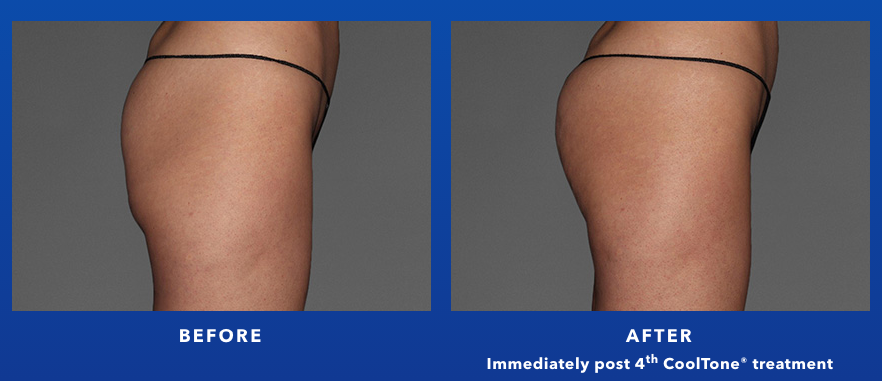
If your main issue is lack of muscle definition in your buttocks, you can boost the results of your exercise with a new device to tone muscles called CoolTone. It uses Magnetic Muscle Stimulation (MMS) technology to penetrate below the fat layer, strengthening, toning, and firming the muscles beneath. 


CoolTone can also be combined with Coolsculpting, which is another non-surgical technology for fat reduction. Fat can be precisely targeted in order to sculpt and shape around the bottom and make it appear more pert. 


  1. Fat transfer


When you have strong gluteal muscles but not enough fat on top, fat transfer to the buttocks can be a great solution. Also known as a Brazilian Butt Lift (or BBL), this procedure involves taking fat from a donor site/s and meticulously grafting it into place in the buttocks, where it becomes permanent.


The fat is removed via liposuction and can be taken from anywhere on the body there is an excess, so it’s like two surgeries in one. The surgeon will aim to remove fat from the waist and flanks (i.e your love handles and muffin tops) in order to sculpt around the buttocks and give the illusion of a more accentuated backside. 


In the photo above, the patient (a 55-year-old female) had liposuction in the abdomen, hips, flanks and back, with the fat transferred to her buttocks. There is no visible scarring with this procedure, since the lipo only requires tiny incisions. 


  1. Gluteal implants


If you are very slim, with little fat available for transfer to the buttocks - or you desire a more accentuated lift - you can choose to have gluteal implants. Silicone implants are inserted through an incision placed in the middle fold of the buttocks, leaving a single scar between 5-6 cms long.


There are different sizes, shapes and projections of butt implants, which your surgeon will help you select depending on your anatomy and aesthetic goals. Liposuction will be used to sculpt around the buttocks to achieve more prominence and definition. Meanwhile, the fat that’s been removed will be used to smooth over the implant and add further shape. 


In the photo above, the patient has undergone gluteoplasty with 270cc anatomical gluteal implants. The implants are made from high resistant silicone that does not rupture, and placed under the great gluteal muscle, meaning they are not detectable under the skin.


Want a rounder, perkier bottom? Contact Ocean Clinic for a consultation or 

check out more before & after photos of buttock augmentation


Friday, 27 August 2021

Coming Soon: An Exciting New Development in Breast Augmentation

Lots of women dream about having larger, fuller breasts, but not everyone likes the idea of breast implants. 


One solution is fat grafting, which allows fat to be transferred from one part of the body and into the breasts. Now, a new technology promises to make this procedure even more effective, with incredible results.


The technology involves 3D printed ‘breast implants’ that are specially tailored to each woman’s body. Read on to find out more…


How do 3D printed breast implants work?


Well, first off, these aren’t breast implants in the traditional sense. They act more like scaffolding, around which to build the breasts. The implants are made out of bioabsorbable polymers and can be printed in various sizes and shapes to suit patients’ anatomies and needs. The polymers dissolve after a year meaning there’s no need to have surgery to remove the implants.


But what do they actually do? The 3D printed implants provide a structure, with a defined shape, which surgeons can use to guide fat grafting. The implants have a lattice design, meaning there are thousands of tiny grooves and holes into which fat can be deposited.


This is a more efficient way of grafting fat because it provides a precise roadmap for where the fat should be added. Currently when fat is grafted to the breast, it’s put into multiple planes so that it’s evenly distributed, but it’s harder to shape. 


The new possibilities with 3D breast implants


What’s really exciting about this new technology is that it will allow women to achieve larger breasts through natural fat grafting than is possible at the moment. That’s because the implant acts as a tissue expander and can be used to create a bigger pocket into which fat can be transplanted.


Patients who have thick or tight skin on their breasts have previously been limited to how big they can go - it all depends on how much fat the surgeon can get into the breast. And if the skin is too taught, it cuts off circulation and the fat doesn’t survive. 


However, by placing the 3D printed breast implant on top of the muscles, it can stretch the skin. And there are more blood vessels and better blood circulation here, which helps the fat to survive. 


3D printed breast implants aren’t only useful for breast augmentations, they can also be used for breast reconstruction surgery. If a patient has undergone a mastectomy and had a breast removed, the implant can be inserted under the skin to both stretch it and create a scaffold for transplanting fat. The implant can be printed to replicate the shape and size of the remaining breast.  


What are the results with 3D printed breast implants?


The big benefit of 3D printed breast implants is that they can be produced to exact specifications, meaning you can choose the ideal shape and volume. With traditional silicone implants, although there is a big range, you’re limited to what’s available ‘off the shelf’.


Being able to print the implant to your requirements means you can really customise the end result. And not only do you get the perfect breast outline, you get it without the firmer tone that comes with standard implants.   


Once the 3D printed breast implant has dissolved, all you’re left with is the grafted fat, which looks, feels and behaves totally naturally.


Another plus point of the technology is that it encourages the growth of new tissue and collagen, further enhancing your results.


When will 3D printed breast implants be available?


Not just yet. The first clinical trials of the ‘Senella scaffold’ developed by BellaSeno are scheduled to begin in Germany before the end of the year. They are yet to be clinically approved, however, according to the company, preclinical studies have had promising results.


“Preclinical studies have shown that the scaffolds slowly get absorbed by the body while the patient's own tissue forms synchronously. After the scaffold has been fully resorbed, the preclinical trials show that the end-result is natural breast tissue with no foreign body remnants,” they say. 


Looks like we’ll just have to watch this space. But until then, we can still create amazing results with fat grafting. Ocean Clinic’s Head Surgeon Dr. Kaye is an expert in the field and is highly skilled at sculpting beautiful, shapely breasts with transplanted fat. 


The procedure is especially effective in women who have lost volume in their breasts due to pregnancy and breastfeeding, weight loss or just ageing. Learn more about our all-natural breast enlargement or contact Ocean Clinic for a consultation.


Monday, 9 August 2021

Should I Get Plastic Surgery? Take Our Quiz

For most people, the decision to get plastic surgery is a big one. Usually, when people come to see us at Ocean Clinic, they’ve already spent years dreaming about getting their ‘problem area’ fixed. 


Committing to plastic surgery absolutely shouldn’t be rushed. However, when our patients finally take the plunge, they always tell us they wished they’d done it earlier. 


Because of this, we thought we’d put together a quiz to help you understand if you’re ready or not, and the impact surgery could have on your wellbeing. Simply select the multiple choice answers that best reflect your situation and see whether you have mostly A’s, B’s or C’s at the end…


Q1. How long have you felt self-conscious about your problem area?

  1. For many years

  2. For the last few years

  3. Only recently


Q2. How do you feel when someone takes your photo?

  1. I try to avoid being in photos

  2. I try to hide my problem area in photos

  3. I’m pretty relaxed about being in photos


Q3. How often do you choose clothes or hairstyles to conceal your problem area?

  1. Always

  2. Most of the time

  3. Sometimes


Q4. To what extent does your problem area affect your romantic relationships?

  1. A lot

  2. A fair amount

  3. Not much


Q5. Have you had a consultation with a plastic surgeon before?

  1. Yes, we discussed the options

  2. No, but I’ve researched clinics

  3. No I haven’t looked into it yet


Q6. What is the main thing preventing you from getting plastic surgery?

  1. The cost

  2. Worry that it might go wrong

  3. Not looking like myself anymore


Q7. What are your expectations for surgery?

  1. To make the best of what I’ve got

  2. To look younger/more attractive

  3. To imitate a celebrity look


Q8. Have you tried other ways to improve your problem area?


  1. Only surgery can fix my problem 

  2. I’ve tried things but nothing has worked

  3. I haven’t tried anything yet


Q9. Are you likely to have any lifestyle changes such as losing or gaining weight or becoming pregnant? 


  1. Unlikely

  2. I’m not sure

  3. Likely


Q10. Do you smoke or use tobacco products?


  1. No

  2. Yes but I could stop

  3. Yes and I’d struggle to stop


The results


If you answered mostly A’s


You’re a great candidate for plastic surgery. Your problem area has had a negative effect on your wellbeing for a long time. It’s affecting your relationships, your confidence and restricting your freedom. When it comes to improving your problem area, you’ve researched your options and realise surgery is the best option. You have realistic expectations about what’s achievable and you’re not about to make any big lifestyle changes meaning you can really enjoy the benefit of your surgery results. If paying for surgery is a barrier, getting an up-to-date quote and looking at financing options might make it accessible for you.  


If you answered mostly B’s


Your problem area has been on your mind for a while now… perhaps it’s time to do something about it? If you haven’t had a consultation with a plastic surgeon before, it makes sense to find out what solutions are open to you and how much this could cost. If you worry about things potentially going wrong with your surgery or no longer looking like yourself, discuss these concerns with the surgeon. Ask to see before and after photos, or even to speak with a previous patient to find out about their experience. Make sure you understand what results are achievable for you and what to expect before you make up your mind.


If you answered mostly C’s


As your appearance does not have a significant impact on your life, it might be unnecessary to go through with plastic surgery. Your dissatisfaction with your problem area may pass or you might be able to achieve improvements through diet and exercise or with non-surgical treatments. And if you simply desire to follow a beauty trend, it’s advisable to do it in a temporary way, because fads pass quickly! Cosmetic treatments like fillers and cosmetic injections can be a good way to get a boost without going under the knife. And don’t forget - smoking is a no-no for surgical procedures so you must be prepared to stop for several weeks if you do decide to have surgery. 


Think you’re a good candidate for plastic surgery? Or simply want a cosmetic ‘tweakment’? Contact Ocean Clinic for more information.


Monday, 2 August 2021

Argon Plasma-Driven Radiofrequency: A New Advancement in Body Contouring

At Ocean Clinic we’re continually exploring ways to achieve better results for our patients. One new technology we’ve recently started using as part of our body contouring surgeries is argon plasma-driven radiofrequency.

The technology has been developed to help shrink skin and tissue and do away with the need for surgical excision. 


Typically after liposuction, patients will be left with some skin laxity and one way we tackle this is with post-surgical radiofrequency skin tightening treatments. Now, however, a new argon plasma-driven radio frequency skin tightening device allows us to induce skin and tissue retraction during the surgery itself.


How does the argon plasma-driven radio frequency skin tightening device work?


The device uses pressurized argon gas to drive radiofrequency energy into a hollow cannula. 


The cannula is moved around in a similar way to a liposuction cannula, rapidly heating small sections of subcutaneous collagen matrix to 85°C. This heat generates strong contraction of the collagen within fractions of a second, causing a 40–50% reduction in fiber length.


Skin tone continues to improve over a year, as new collagen develops within the tissue. Studies show the treatment can achieve up to 36% measured skin surface area contraction.


Is it safe?


The argon plasma-driven radio frequency skin tightening device is actually safer than other radiofrequency devices because it only heats a small targeted area. Unlike with bulk tissue heating, the tissue surrounding the treatment site remains at much cooler temperatures. Clinical measurements show that in an average treatment region, skin temperatures get to about 38° when treated with the argon plasma-driven device, as opposed to 45° and higher with bulk heating devices. 


Because of the unique heating and cooling properties of the technology, immediate soft tissue contraction can be achieved without unnecessarily heating the full thickness of the dermis. 


What happens during treatment?


The treatment is carried out immediately after your liposuction procedure, while you are still sedated and on the operating table. The device is inserted and slowly withdrawn a number of times from the same incisions made for the liposuction cannula. These ‘strokes’ are done at different depths in order to trigger significant soft tissue and skin contraction that will be visible within 24 hours of treatment. 


What are the results?


When liposuction is combined with argon plasma-driven radiofrequency energy, it results in significant improvement in the contour and laxity of skin and soft tissue. Improvement can be seen as early as the next day but tissue contraction really becomes noticeable about three months post-op and continues for a year or more. 


However, results do depend upon the patient taking responsibility for aftercare, which includes wearing compression garments as instructed by your surgeon. This is vital for achieving the desired smooth contour.


Who can benefit from the argon plasma-driven radio frequency skin tightening device?


Anyone who is undergoing a body contouring treatment with liposuction can benefit from argon plasma-driven radiofrequency. The device enhances the results of liposuction, helping to restore the firm tone and defined shape of youthful body contours.


Popular treatment regions include the abdomen, flanks, thighs, knees, upper arms and bra roll, as well as the lower face and neck. Post-bariatric patients can be treated if the need for skin contraction is less than 33%. 


Women who have given birth and want to restore their physique can also be helped, although diastasis recti (separation of the abdominal muscles) can only be slightly improved. This condition is better treated with a tummy tuck and surgery can be combined with liposuction and argon plasma-driven radiofrequency to improve the overall silhouette and skin tone. 


Argon plasma-driven radio frequency skin tightening can also be used during breast lift surgery to significantly improve the breast skin and tissue, resulting in breasts that are not only perkier but also younger in tone and texture.


Want to find out more about body contouring treatments with the argon plasma-driven radio frequency skin tightening device? Contact Ocean Clinic by telephone: (+34) 951 77 55 18 or by email: info@oceanclinic.net 


Thursday, 1 July 2021

10 Things You Need To Know About Breast Uplift

Thinking about having a breast lift? Here are 10 facts about the procedure that will help you to make up your mind…

A breast lift is the only way to fix sagging breasts

If your breasts have started to sag you might have tried various things to fix them, like exercises, creams, and skin tightening devices. Unfortunately, these will only ever achieve a minor improvement (if any). Breasts are made of fatty tissue and although you can work on the pectoral muscles beneath, this will have no effect on the breast tissue itself. On the other hand, a breast lift (also called a mastopexy) is a safe and effective way to restore breasts to their youthful state. 

A breast lift won’t increase the size of your breasts

While a breast uplift will give you better-shaped breasts and get rid of upper-pole flatness, it won’t actually make them bigger. If you think you might also want to change the size of your breasts, an uplift can be combined with breast implants or fat transfer. A good way to understand what you want is to look at your breasts in a bra - are you happy with the size? If the answer is yes, then only an uplift is needed. If the answer is no, your plastic surgeon will need to add extra volume with either implants or fat transfer. 


A breast lift won’t decrease the size of your breasts

Just as an uplift won’t make your breasts bigger, it also won’t make them smaller! A mastopexy is carried out purely to reshape and reposition the breast tissue and remove any excess skin - it doesn’t include the removal of breast tissue. If you desire smaller breasts, you can combine an uplift with a breast reduction. For women with large breasts, a reduction can make their breasts less likely to sag again in the future, and prolong the results of an uplift. 

A breast lift will leave some scarring 

There are three established techniques for performing a breast uplift and the method that your surgeon uses will depend on the extent of your sagging, the size of your breasts, and position of your nipple. For light sagging, the scars will be placed around the areola and, if necessary, vertically down the breast (in the shape of a lollipop). Moderately sagging breasts require a small extension of the lollipop incision into the fold beneath the breasts. When a more severe degree of sagging is present, the incision beneath the breasts will be longer, forming an anchor shape. Ultimately, though, all scars are hidden as much as possible and will eventually fade away to become barely noticeable. 

You’ll need to take a little downtime

If you have only an uplift (not implants), recovery is surprisingly quick. That’s because the surgery only involves fatty tissue and skin rather than muscle so it’s less invasive and less painful. You can be up and walking about within a few hours after surgery. Soreness, nerve pain, and inflammation are well controlled with pain meds, however, you will need to avoid exercise and any heavy lifting for four weeks after surgery. If you have a young child who requires lifting you’ll need to make sure you have some help at home.  

You’ll need to quit smoking before a breast uplift

If you’re a smoker (or vaper), you’ll need to ask yourself if you’re prepared to stop smoking for at least six weeks (preferably longer). Your surgeon will ask you to avoid nicotine for three weeks prior to surgery and three weeks post-surgery. It’s especially important for breast uplift surgery because skin is detached in order to be lifted and tightened. During this process, normal blood flow is restricted so it’s vital the remaining blood flow is sufficiently oxygenated, otherwise there’s a greater risk of skin, fat and nipple necrosis.

A breast lift won’t affect your ability to breastfeed in future

A breast uplift will rarely interfere with a woman’s ability to breastfeed. An experienced surgeon will be able to minimise the amount of nerve damage sustained. This is important because nerves trigger the release of prolactin and oxytocin, two hormones that affect milk production and letdown. It is advisable to wait for at least 18-months after having a breast lift before becoming pregnant, giving your nerves time to recover and for full sensation to return.

Your overall silhouette can be improved with a breast lift 

Returning the breasts to their ideal position on the chest can completely transform your figure, making you appear slimmer and better proportioned. However, sometimes, you may have accumulated fat below or above your bra that detracts from your newly shaped breasts. We often perform simultaneous liposuction in the surrounding areas for a better aesthetic result.

We’ll ask you to return to the clinic for postoperative care

If you’re visiting Spain for plastic surgery, you can be discharged and return home after a week. But, ideally, we like all our breast lift patients to visit the clinic on a weekly basis for four weeks to receive postoperative lymphatic drainage massage, which is included in the price. This treatment helps to reduce swelling and speed up healing, leading to a better final result. 

Sometimes it makes sense to wait before having a breast lift 

Breast lift is a procedure with very high satisfaction rates, but it’s important to note that the results can be undone by weight loss, weight gain and pregnancy. Therefore, you need to ask yourself if it’s the right time in your life to undergo the surgery. If you’re planning to become pregnant, it’s better to wait until you’ve completed your family because pregnancy can significantly alter the size and shape of your breasts. Likewise, if you plan to lose weight or your weight routinely fluctuates, it’s advisable to wait until you’ve reached a stable size. This will avoid the need for revision surgery in the future.

Think breast lift surgery could be right for you? Book a free consultation with one of our surgeons and find out more. 

Friday, 25 June 2021

Am I a Good Candidate for a Tummy Tuck?

 Tummy tuck surgery can help you shift stubborn fat deposits and fix loose skin and muscles. If a tighter, more toned tummy is something that interests you, you might be wondering if a tummy tuck is suitable for you? 

In this article, we’ll look at who the ideal candidate is for this type of surgery…


There are a number of factors that dictate whether or not you’re an ideal candidate for abdominoplasty, let’s run through them:


1.Your weight 


Ideally, you should be within 20% of the ideal body weight for your age and height. A tummy tuck isn’t an alternative to a healthy diet and exercise, rather a complement to it. It can be used to help you shift weight that is resistant to diet and exercise and repair stretched muscle and skin (something that no amount of dieting or exercise can do).


Good candidates are often people who’ve had significant weight loss, including those who have had bariatric surgery and have been left with sagging skin and tissue. If you are still overweight or have a significant amount of intra-abdominal fat that surrounds your internal organs, you may need to slim down before considering a tummy tuck.


2. Your health


It’s important that you’re in good general health to undergo a tummy tuck and that your doctor feels it is safe for you to undergo general anesthesia. Your age may be a factor in this, as well as any history of heart issues. You’ll need to talk to your plastic surgeon about your medical history, including any previous abdominal surgery you’ve had, since internal or external scars may affect your candidacy.


If you’re a smoker, you must be prepared to stop smoking for several weeks prior to and after surgery. This is because smoking can cause a delay in wound healing as well as skin necrosis (skin death).


On the other hand, there are health issues that abdominoplasty can be used to treat, including umbilical hernias, keloid scarring, and diastasis recti. Often caused by pregnancy, diastasis recti is a condition where the left and right sides of the abdominal muscles (‘six pack’) separate. 


3. Your body shape


If you have an apple-shaped body, you’ll naturally carry more weight around the midriff. You’ll struggle to achieve a flat tummy or a defined waist through diet and exercise, yet your legs, hips, and bottom may be skinny. Some people are simply genetically predisposed to have a bit of a belly, even if they’re physically in good shape otherwise. These people are perfect for abdominoplasty as it allows them to have the body they’ve worked for in the gym.


Pregnancy can also change your body shape and the areas where you store weight. Hormone fluctuations might mean you lay down more fat on your breasts, tummy, and hips. And you may find your tummy now bulges, where before it was flat. Pregnancy stretches out the muscles of your abdominal wall and often leaves you with stretch marks and excess skin. Women who’ve experienced a change to their abdomen following pregnancy frequently make ideal tummy tuck candidates.


4. Your age


It’s not only pregnancy that can cause loose abdominal muscles and lax skin; the normal aging process can too. As we age, our muscles weaken and lose tone, while our skin also loses elasticity and begins to sag. In addition to this, our metabolism changes and it becomes harder to keep weight off.


This means that our tummies usually don’t look the same at 50 as they did at 20 - even if we’ve maintained a healthy lifestyle. Middle-aged people, both male and female can enjoy huge benefits from abdominoplasty. The surgery, which is usually combined with liposuction, can also tackle other things that creep up on us with age, including love handles, muffin tops, and bra rolls.


5. Your future plans


A tummy tuck is a fairly extensive surgery and it’s also an investment, so you’ll want to maintain the results for as long as possible afterward. If you’re a woman, it’s important to think about your family plans - is it likely you’ll become pregnant again in future? If the answer is yes, it makes sense to wait until you’ve completed your family before having an abdominoplasty. A pregnancy could undo the results of your surgery. The muscles that are repaired can separate again and skin that has been tightened will be stretched, deteriorating the skin quality. 


Equally, gaining or losing a lot of weight will have a detrimental effect on your results. Therefore, if you’re planning on losing weight, you should delay your tummy tuck. An ideal candidate for surgery has reached a stable body weight and established good, sustainable habits when it comes to diet and exercise. 


Are you a good candidate for a tummy tuck? Why not book a free consultation at Ocean Clinic to find out? Visit one of our three clinics or speak to a plastic surgeon by video call.