Tuesday, 14 April 2020

#YoMeQuedoEnCasa: Dr Richard M Fakin, Director of Ocean Clinic Madrid & Zurich

Ocean Clinic is closed during Spain's state of alarm but our team is still keeping busy. The #YoMeQuedoEnCasa blog series looks at what they're up to.


What is your role at Ocean Clinic?

I'm a plastic surgeon and Director of Ocean Clinic in Zurich, Switzerland, and in Madrid, Spain. Both the clinics are closed right now. We cannot operate any elective surgery, only emergency surgery.

What are you doing with your time while Ocean Clinic is closed?

On a personal note, I’m spending a lot of time with my family and my kids. It's something that we're not used to so there’s a lot of bonding. I think in every crisis, there are also positive things too.

On a professional note, I am writing original articles for scientific publications. It’s something I used to do a lot in the past but haven’t had time to do recently. Now that I have time I’m writing about my experience and my surgical techniques. One of the articles is about gender reassignment surgery and another is about breast augmentation.

How are you staying in touch with the industry and your peers during this time?

We have a lot of Zoom meetings and lots of WhatsApp groups, so there is a lot of interesting and interactive discussions. We call each other much more than we used to. It's nice to see and hear my colleagues. I’ve also been reading more scientific literature and staying up to date with all the data that has been published. 

How are you staying motivated?

I think all of us agree that this crisis will eventually go away. It will pass over and life will come back and this is the light at the end of the tunnel. I am still calling my patients by Zoom or they call me. It's a different media but it's a huge motivation to see them.

We’ve also done some first consultations online with people who are interested in reconstructive or plastic surgery. It does have its limitations - it's always different to see someone on the computer and not talk in person but I think the most important things can be discussed. And actually, I think it's worked out much better than I thought it would at the beginning. 

Do you think the coronavirus crisis will have any long term impact on your role or field of specialism?

I think there will be things that will change after the crisis in all parameters of our lives and also in our industry. I think we'll be seeing far fewer patients simply due to the fact that a lot of people are losing a lot of money and aesthetic surgery is not essential. It's a luxury. 

In the longterm, I think there will be a shift back to high-quality aesthetic providers. I think people are being much more sensible in regards to health in general now. They're looking more for facts, for experience, for high quality and experienced surgeons. In my opinion, before the crisis, there was some banalising of aesthetic surgery. There was a lot of advertising, too much on social media and on television and in magazines. I think influencers on Instagram will lose a lot of influence and they'll be a shift back to professionalism, to transparency and quality. 

What are you looking forward to when you return to work?

I'm looking forward to what I enjoy the most, which means to operate and be in the surgery room. I look forward to seeing my patients again in my clinic; to talk to people, to see people and have this human contact. It's something I miss very much. 

Thursday, 9 April 2020

#YoMeQuedoEnCasa: Dr Felix Paprottka, Plastic Surgeon

Ocean Clinic is closed during Spain's state of alarm but our team is still keeping busy. The #YoMeQuedoEnCasa blog series looks at what they're up to.


What is your role at Ocean Clinic?

I’m a Plastic Surgeon at Ocean Clinic specialising in face and breast surgery as well as body contouring. I'm treating my own patients and work hand-in-hand with my boss Dr. Kaye.

What are you doing with your time while Ocean Clinic is closed?

I’m staying on call for all of our patients and doing postoperative checkups. We have patients that have been operated on prior to the lockdown and need follow-up care. We have to make sure everything's healing nicely.

Me and Dr. Kaye are the only ones coming into the clinic in order to minimise the chances of anyone becoming infected. Strong hygienic measures are the key to solving this pandemic crisis.

How are you staying in touch with the industry and your peers during this time?

We have quite a lot of contact with our colleagues and coworkers through various forums, where we discuss views on COVID-19 and its future impact, and how we will spend our time once this intense period has passed.

Unfortunately, our annual meeting, the Marbella International Summer School (MIPSS) has been cancelled. It's going to be postponed until next year. It’s sad because we had some excellent international speakers coming and lots of visitors from all around the world flying in. But due to the situation and all the travel restrictions we decided it was too risky to go ahead. The safety of the participants comes first. 

How are you staying motivated?

First of all, I'm motivated all the time. If I’m not working for the clinic, I’m doing my daily sports sessions at home and nowadays working on my cooking skills. I’ve also been doing some research projects. We still have a follow-up publication on the earlobe tailoring technique we published two years ago. 

We are also working on another new technique for breast augmentation in combination with a lifting procedure which prevents a loss of volume behind the nipple-area-complex. It means you have a fuller and more round breast afterwards and therefore it's more aesthetically pleasing.

Do you think the coronavirus crisis will have any long term impact on your role or field of specialism?

This is hard to estimate at the moment, but since patients will always have an interest in improving their looks, we should be fine in the months ahead of us. We have a solid base of faithful patients that use our services on a very frequent basis. Ocean Clinic has been around for over 10 years and has a very good reputation. 

We are trying to stay up to date with all the latest information. The International Society of Aesthetic Plastic Surgeons is always offering video tutorials and advice on how to handle the COVID-19 situation. 

What are you looking forward to when you return to work?

I miss operating, so I’m looking forward to that. Also treating patients with cosmetic injections and other conservative treatments such as filler, which we are not doing at the moment. Patient satisfaction is, of course, my reward.

Also being an Ocean Clinic team member is like being part of a family. So, therefore, I’m looking forward to reuniting with my colleagues, and with my wider peer group when we’re able to travel to medical meetings again.

Sunday, 5 April 2020

#YoMeQuedoEnCasa: Louise Taylor, Head Surgical Nurse

Ocean Clinic is closed during Spain's state of alarm but our team is still keeping busy. The #YoMeQuedoEnCasa blog series looks at what they're up to.


What is your role at Ocean Clinic?

I’m Louise Taylor, Head Surgical Nurse and Operating Theatre Technician. I oversee the day-to-day smooth running of everything to do with the surgical agenda and also assist during surgery.

What are you doing with your time while Ocean Clinic is closed?

I’m really enjoying the unexpected downtime, to be honest! Our working week is always very busy so I normally have to wait until annual holidays to really relax. I’m filling my time by reading, spring cleaning, catching up with friends far and wide by social media, cooking, enjoying the sun on my terrace, with very occasional trips to the supermarket. If isolating means staying safe, it’s worth it.

How are you staying in touch with the industry and your peers during this time?

We have an Ocean Clinic staff WhatsApp group that enables us to stay in contact, share news and articles about the current situation, with plenty of humorous posts to keep spirits up.

How are you staying motivated?

I’m not concerned about motivation right now, for me it’s a time for reflection and introspection. The motivation will return when it’s time to go back to work!

Do you think the coronavirus crisis will have any long term impact on your role or field of specialism?

COVID-19 will affect almost every industry worldwide and it would be foolish to think people will rush to have plastic surgery when this is over. It will take some time for things to return to normal, no doubt some things will be changed forever. There will be some tough times and hard decisions ahead, but normality will return one day and Ocean Clinic, with its world-class services and highly qualified team, will be waiting.

What are you looking forwards to when you return to work?

I’m looking forward to seeing my colleagues, meeting patients new and old, preparing the operating theatre, seeing the magic happen in our surgeons’ hands, and leaving work on Friday evening after a busy but satisfying week!

Thursday, 2 April 2020

COVID-19 and Your Plastic Surgery: Dr Kaye Answers Your Questions

If you have plastic surgery scheduled for the coming months or were planning to undergo a procedure, you’ll no doubt have questions about the current situation with COVID-19.
Ocean Clinic has been in contact with patients and prospective patients over the last few weeks responding to their concerns. We’ve compiled the most commonly asked questions, along with answers from Ocean Clinic’s Head Surgeon Dr. Kai O. Kaye. 
This is the latest information we have. Since the situation is evolving all the time, we will update this article as more information becomes available. 

  1. When will I be able to schedule surgery?

    We don’t know an exact day yet, as it depends on the end of the state of emergency in Spain.  As soon as this is declared we will start re-booking postponed surgeries and scheduling in new patients.
  2. Will there be a long waiting list for surgery once clinics are open again?

    Most probably, as we already have a waiting list and are still doing consultations by Skype. New slots will be given in order of bookings, so we recommend our patients to prebook their dates in advance.
  3. Is it possible to have a consultation at the moment?

    Yes, we are currently offering consultations by appointment via Skype or Zoom. If you would like to arrange a consultation with one of our surgeons, please contact our reception by mail or phone.
  4. Are there any procedures that can still take place, such as reconstructive surgery?

    We are physically closed for elective surgery at the moment, only emergency surgical treatments will be performed to minimise risks for patients and staff.
  5. What happens if I book surgery for a future date but it's unable to take place?

    You can prebook your surgery at no cost at the moment. Closer to the date of your surgery (approximately four weeks) our admin team will confirm the date with you and request a downpayment. If anything happens in the future that makes this date impossible due to external factors, we will refund or rebook at no cost.
  6.  I have surgery booked but now I'm worried about being able to pay for it - what are my options?

    You can speak with reception about fractioning your payments, which we will offer on a case-to-case basis.
  7. What measures will you take to reduce coronavirus-related risks during surgery?

    We have already introduced international safety protocols regarding the protection of patients and staff. You will see your surgeons and nurses in more extended surgical protection gear. As a patient, you will be required to wear masks in many areas and our surface cleaning protocols are more focused on viral contamination. Most importantly, we will spread patient flow to avoid contact with any other patients and non-essential staff by spreading clinic hours and treating patients one at a time.
  8. Will it be safer to have surgery at your clinic with regards to possible COVID-19 infections than going to a hospital for a procedure?

    As a private outpatient clinic, we have a big advantage that we only treat elective cases and can test and separate before we operate. A hospital has to take and treat anybody who is sick, for whatever reason. Furthermore, in hospitals, operating rooms and recovery areas are shared between all patients and this may lead to the risk of cross-contamination.
  9. Will you perform COVID-19 testing?

    In fact, we already performed testing on some patients before the lockdown to ensure safety for staff and patients if there were risk factors. It is possible that we will perform COVID-19 testing within our pre-op labwork (based on test availability ) for a certain time.
  10. Will I be unable to have surgery if I have a cough or cold or flu symptoms?

    Like with any elective surgery that is non-urgent, we will operate on you only when you’re fit and well. In cases of flu-like symptoms, we may test you prior to surgery.

Do you have a question that we haven’t answered? Please get in touch via phone or email.

Tuesday, 31 March 2020

Dentistry on Lockdown - What is Emergency Dental Treatment?

We’re staying home and staying safe… meaning most dental work will have to be put to one side for now. But what if you need emergency treatment?

As part of Ocean Clinic’s specialist cosmetic team, patients come to us seeking elective treatment to improve and upgrade their smile, rather than just day-to-day basic dental care.
But while aesthetics are our speciality, health is, of course, the foundation of beauty. That’s why we always provide holistic dental care, making sure our cosmetic improvements are built around healthy gums and teeth, which are in harmony with the function of the muscles and jaw joints. 
We know problems can sometimes occur, especially as we deal with more complex cases, including patients who have had repeated treatments in the same area or have neglected their teeth for a long time (due to fear or financial reasons). 
So, what constitutes a dental emergency?
You need to seek urgent dental treatment if you have:
  • Facial swelling extending to the eye or neck or floor of the mouth
  • Bleeding due to trauma of the mouth
  • A severely broken tooth or a tooth that has fallen out and is causing you pain
  • Toothache that is preventing you from sleeping and eating, combined with swelling and fever that is not manageable by painkillers
  • Difficulty swallowing due to swelling 
Bleeding gums, loose or lost crowns, rubbing dentures, broken fillings, chipped teeth with no pain and loose orthodontic wires are classified as non-urgent and may need to wait until regular services are reopened and able to help you again.
However, here are some solutions to less urgent, common causes of dental discomfort to help you cope at home during lockdown.

Coping with other conditions
For any other dental discomfort, over-the-counter painkillers can help. However, if you believe you may have covid-19, you should take paracetamol in preference to ibuprofen.
Sensitive teeth
If you have extreme sensitivity to hot or cold food or drink, sensitive toothpaste can help. Rub the affected area directly with a toothpaste such as Sensodyne Repair or even anaesthetic gel like Orajel and do not rinse away. Apply up to three times a day after meals and before bed.
Painful wisdom teeth
If you have wisdom tooth pain, most flare-ups can be managed with good home care. Do a thorough cleaning of the area with a soft brush (even if painful to touch) and use Corsodyl mouthwash. Try to keep to a soft diet and stop smoking. * Should you develop additional symptoms like a restricted mouth opening and swelling then you may need to be seen urgently.
Mouth ulcers
Most ulcers typically heal within 7-10 days. To ease the pain try hot, salty mouthwashes, Difflam Spray (benzydamine) and Orajel. Keep to a soft diet and use Corsodyl mouthwash to prevent infection.

If you are experiencing dental problems and are not sure whether you can get treatment, please call or email us and we’ll do our best to advise you. 

Friday, 13 March 2020

Cosmetic Injection or Brow Lift Surgery?

Are your eyebrows migrating downwards? Are your eyelids becoming hooded? When gravity starts to take its toll on our foreheads the effect can be ageing.


Restoring your brow to a more youthful position can be done both surgically and non-surgically using muscle relaxants. In this article, we’ll look at both options and help you understand which is best for you.

What is a Surgical Brow Lift?

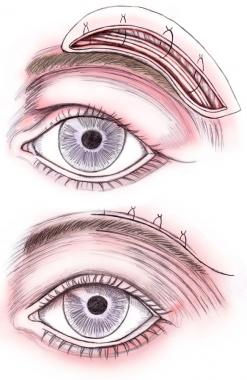
A brow lift (also known as a forehead lift) is often combined with a facelift or upper eyelid surgery (blepharoplasty) but it can be performed on its own. In simple terms, a brow lift involves the lifting and tightening of the forehead and surgical removal of any excess skin.

There are two different methods we use to carry out a brow lift at Ocean Clinic Marbella. The first is the direct excision brow lift, which sees portions of skin removed from directly above the eyebrows, with incisions hidden in the hairline of the eyebrow. This raises the eyebrows and the upper eyelids, in order to “open up” the eyes.


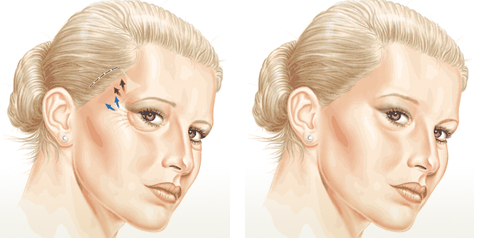
The second technique, a temporal lift, involves incisions made in your hairline at your temples.  As the procedure is carried out endoscopically, it’s less invasive, however, it only lifts the outside tail of the brow. This helps to correct hooded eyelids and smooth crow’s feet but won’t be effective for a very heavy brow since it doesn’t alter the middle of the brow or forehead area.


Which method we use depends on your age, skin quality, the severity of sagging and whether you’re suffering from any asymmetry. We will assess your facial anatomy and bone structure to ensure your brows are placed in a natural position - you don’t want to be left looking permanently surprised! 

Both types of brow lifts can be performed under local anaesthetic with sedation and you can return home the same day. The operation is safe and recovery is rapid, although you may have some bruising and swelling. You’ll need to return to the clinic to have your stitches removed after 7-10 days and you can expect scarring to fade away within a few months.

The result of a brow lift is long-lasting, however, your skin will continue to lose elasticity as you age, meaning it won’t last forever.

What is a Non-Surgical Brow Lift?

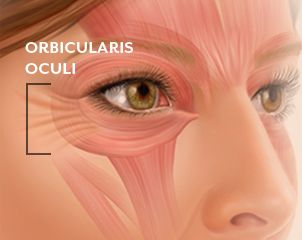
A non-surgical brow lift is performed using cosmetic injectable muscle relaxants. The muscle relaxant is injected into the orbicularis oculi muscle that surrounds the eye. By relaxing this muscle, the downward force is released. This allows the forehead muscles to pull upwards and elevates the eyebrows. 

Meanwhile, placing injections at the ends of the eyebrows raises the tail of the eyebrow. This can help correct upper eyelids that are starting to sag and open up the eyes so you look more awake. 


This treatment can be carried out in a matter of minutes and requires no downtime. However, the results are more subtle than those achieved through surgery and they are also impermanent. The injection result typically lasts between three to six months, depending on the individual. After this time, the muscle action returns and the brow will resume its previous position. 


Cosmetic Injection or Brow Lift - Which is Right for You?

Whether you choose a surgical or non-surgical solution will depend on your age, the severity of sagging and your budget. Brow drooping normally becomes apparent in a person’s late thirties, although a low brow can be hereditary so it can also be seen in younger patients.

If you are only displaying early signs of skin laxity, injectables can be an effective treatment and can delay the need for surgery. In combination with the effect the injectable has on relieving forehead lines, crow’s feet and lines between the eyebrows, it can considerably freshen up a face. 

You might wish to experiment with the cosmetic injection and, if you like the results, opt for an endoscopic temporal lift in order to make the changes permanent. Injections need repeating several times a year and, while it’s considerably cheaper than a surgical brow lift, these costs clock up quickly. This can make surgery better value for money in the long run.

For older patients, with deep furrows in the forehead, pronounced eye hooding or a low-set brow, more extensive surgery is recommended since the results of cosmetic injection or an endoscopic temporal lift will be minimal. On the other hand, the result of an excision brow lift can be dramatic - you’ll no longer look tired or angry and it can take years off your face. 

For a full assessment of your forehead, brow and upper eyelids, make an appointment for a consultation with one of our plastic surgeons. 

Problem Teeth - Root Canal vs Extraction and Dental Implant


Many decades ago, patients were encouraged to consider extraction as a long-term solution to problem teeth, but this philosophy has been considered out-of-date for 50 years or more.


These days dentists would prefer to do anything to help their patients hang on to their own teeth for as long as possible! We have also become aware of what happens if we just leave a space instead of replacing the extracted tooth (something we discussed in a previous blog). 
Obviously, the consequences of an extraction depend on the tooth in question. When it comes to problem teeth, losing a lower back tooth will be a lot less traumatic for most patients than an upper front one, due to the major change in appearance.
However, losing a tooth in any position may significantly affect your occlusion or bite. Most patients will adapt and manage to retain a normal diet if they lose one or several of their molars, but if there are multiple spaces, overall function can become a problem.
In addition, biting forces may not be distributed evenly between the remaining teeth causing these teeth to have more wear and tear and suffer from sensitivity when biting. This can lead to chipping or fracture and increased mobility.
The loss of even a single opposing tooth may mean over time that the tooth directly below or above the space can grow into the space and become unstable. This may even – in worst-case scenarios – result in the eventual loss of this tooth as well. 
As teeth drift, spaces will open between them and these can trap food, making it difficult to maintain effective oral hygiene and lead to problems of dental decay and gum disease. 
Given all the potential consequences of tooth loss, it makes sense that the final decision to extract or try to keep the tooth should be considered carefully. If deciding to extract, then dental implants are a popular option to replace the tooth with a natural-looking alternative.
An implant not only improves aesthetics but also maintains the other teeth in their correct position with even distribution of force and harmony in function.
Of course, the final decision is down to the patient and there are many factors to consider. The three most common influential factors are cost, time of treatment and prognosis.
Cost
These days implants are a very popular and readily available treatment option. However, at first glance, they may still appear to be less economic than trying to save your own tooth. 
However, do be sure that you have a full estimate of what´s involved when trying to keep your problem tooth, which might otherwise be extracted.
Often these badly broken down/decayed teeth require a root canal treatment as the decay has now spread to the centre of the tooth where the pulp (nerves and blood vessels of the tooth) are found.
Once this has been done, the tooth structure remains very weak and may need to be built up with a large filling or more commonly a crown. 
There is often minimal difference between this series of restorative procedures and the extraction and straightforward placement of an implant and crown. 
Treatment Time
As with all things clinical, this varies from case to case. Generally though, both the restorative treatment (root canal, crown) and the implant procedure will require multiple visits over a period of time.
However, you might be surprised to know that the surgical stage of placing an implant often takes far less time than performing a root canal treatment on a back tooth. But implants must be allowed to heal and integrate with the surrounding tissues and this can often take several months to occur. 
Despite many advances in treatment protocols, this healing period is still essential although during this time you may have a temporary in place.
In contrast, the time from start to finish of completing the restorative treatment to save your own tooth doesn’t usually require any set healing time in between and hence can be completed much faster.
Prognosis
Again, this depends on what state the problem tooth is in. Front teeth are easier to access and treat and have single root canal systems so there is a higher success rate than when we are working on back teeth with complicated, multiple root canal systems. 
Modern techniques have resulted in a far better chance of retaining the tooth for many years, however, it does depend on who performs the treatment. An endodontist (root canal specialist) typically enjoys a success rate of around 95-98%, whereas studies indicate that for a general practitioner it is around 80-85%.
Unfortunately, in nature, nothing carries a total guarantee and if you are unlucky enough to be in the small percentage that does not succeed then extraction and implant placement may be needed.
It’s important to realise, though, that even if all goes to plan, you probably will not keep that tooth for your lifetime. The weakened nature of the tooth plus the possibility of reinfection may mean you have anywhere between a couple of years to around 10 years in good scenarios. So some might say you may just be prolonging that final extraction.
Implants, on the other hand, are more predictable in their success rate and, provided all factors are favourable once they have successfully integrated and they are well maintained, should last a lifetime.
The overlying crown may need to be replaced (just like any other dental work in your mouth subject to biting forces over time) but the root of the implant should remain healthy.

Keen to know what the best option is for your problem tooth? Why not make an appointment for a free consultation? 
Contact Ocean Dental Marbella on (+34) 951 77 55 18 or email dentalclinic.oceanclinic@gmail.com