Friday, 21 August 2020

Why we love... Lateral Brow Lift and Upper Blepharoplasty

 Plastic surgeon Dr Felix Paprottka loves restoring drooping brows to their youthful position. He explains how he does it using a combination of procedures; lateral brow lift and upper blepharoplasty


What is your favourite procedure to perform? 


I personally like the lateral brow lift in combination with an upper blepharoplasty (upper eyelid correction). Patients with a long forehead, at some point in their life, will face the problem that their brows look droopy. These patients will always look a bit tired because of their heavy brows — meaning the lateral sides of their brows are hanging down and there is an excess of skin in the upper eyelid area. Sometimes this look can be even more visible after a cosmetic injectable treatment in the forehead area, which makes the muscles relax even more. 


Many surgeons treat this appearance with just an upper blepharoplasty, removing only the skin in the upper eyelid area. By doing this, the distance between the brow and the upper eyelid becomes shorter and shorter with every surgical procedure and it starts to look unnatural. Also, the problem with the hanging brow has not been solved by this attempt. By carrying out a lateral brow lift with an upper blepharoplasty, the excess skin is removed and the outside tail of the eyebrows is lifted. This not only helps to correct hooded eyelids and smooth crow’s feet but also creates the appearance of sexy, foxy eyes.


Why do you like performing lateral brow lift and upper blepharoplasty? 


I am a big fan of it because the natural position of the brows can be restored by this procedure. In order to restore the brows, the plastic surgeon first lifts the lateral brow area and, thereafter, removes the left-over skin in the upper eyelid area. When combining these two procedures, it’s very important to start with the lateral brow lift, since then the surgeon can actually see how much skin needs to be resected in the upper eyelid area. 


I also like this intervention as it can be easily performed under sedation. This means the patient receives some intravenous medication in order to feel sleepy and relaxed but is breathing on her/his own. They mostly cannot remember anything about the procedure when they wake up. If a patient wishes to have this procedure performed with local anaesthesia only, this can be offered as well.


How many times have you done lateral brow lift and upper blepharoplasty? 


This is a procedure we perform at least once every two weeks in Ocean Clinic.


How are lateral brow lift and upper blepharoplasty surgery carried out? 


For the lateral brow lift, a 2 cm horizontal cut is applied in the hairline around the temples. This is an area where women do not lose any hair while ageing so the scar is well hidden. Via this access, the lateral brow is moved upwards by applying an interlocking suture. The same result is reproduced on the contralateral side and the wounds are closed with staples (staples are used since they can be removed almost painlessly in the hair region after 10 days following surgery.)


Next, a fine skin resection is performed, removing the left-over skin in the upper eyelid region. The scar is placed in the tarsal fold, so it’s almost invisible. In general, scars in the face heal very well. With these two combined interventions, the tired look from which many patients suffer can be resolved and corrected. I am always amazed by the great results we can achieve!

What’s the most technical part of lateral brow lift and upper blepharoplasty surgery? 


The most technical part of the lateral brow lift is placing the interlocking suture. It functions as a pulley block; with one suture, the deep fascia is grabbed and with the other part, the overlaying skin is pulled upwards. As a result, the lateral part of the brow can be lifted nicely, resulting in a “V” shaped brow area. 


The challenging part of an upper blepharoplasty is to resect the skin in such a manner that the scar is placed directly in the existing tarsal fold and therefore is not visible. But since we do these surgeries very frequently these surgical steps are not difficult for us.

Have there been any changes in the technique or technology used in this procedure? 


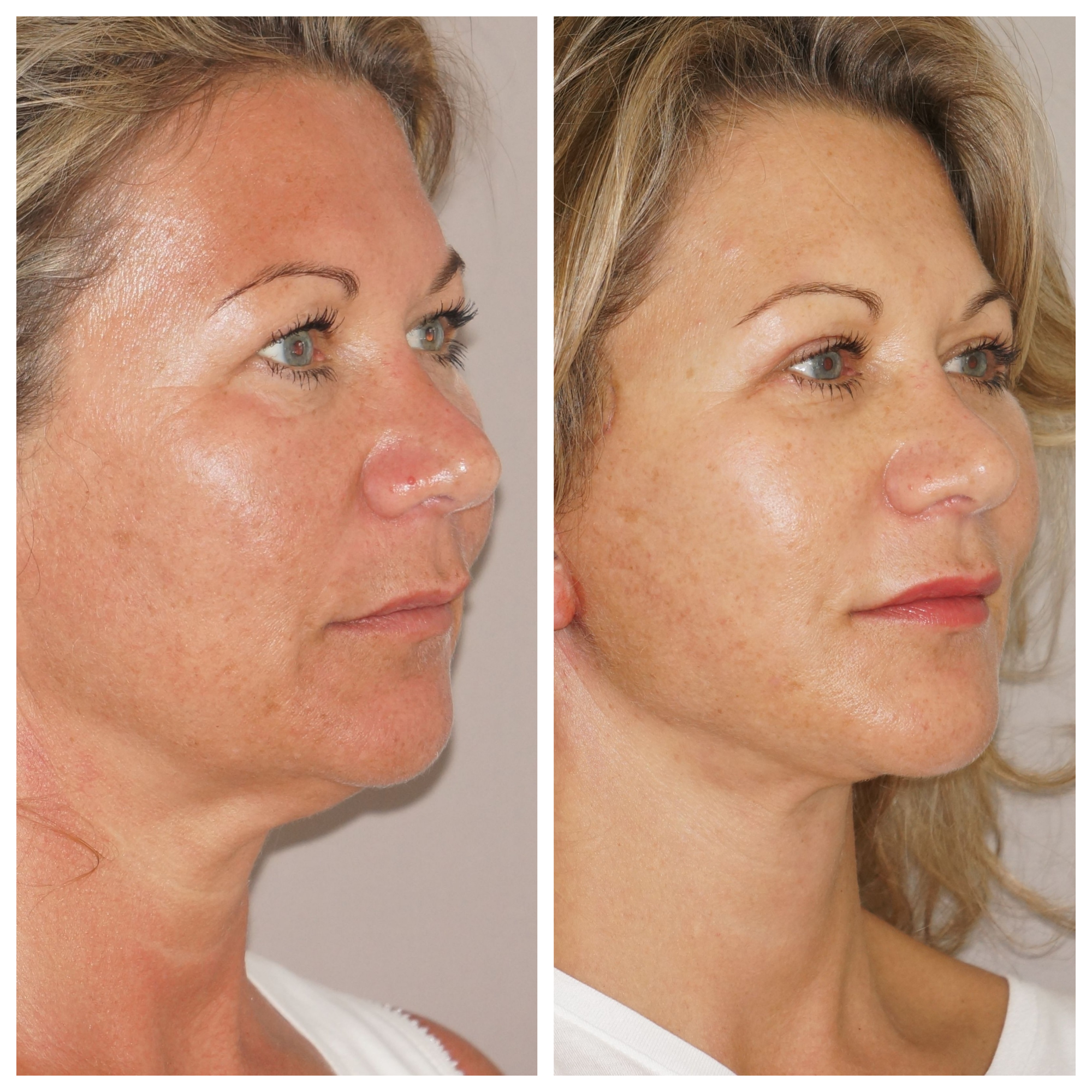
In the beginning, some plastic surgeons performed a full forehead-lift. This results in a long horizontal scar, which is placed in the hairline transition zone. This technique can be used if the medial part of the brow is also drooping and needs to be lifted. But for most patient cases with just a lateral drooping brow, the lateral brow lift is the best treatment option. An endoscopic technique can be applied when it makes sense, resulting in even smaller scars.


How might lateral brow lift and upper blepharoplasty surgery change in the future? 


This technique has already been improved over a long period of time and really works very well. So we do not expect major changes in the future.

Do you have any memories that stand out in relation to this procedure or the patients you’ve carried it out on? 


Yes, all of my patients are always very happy and excited directly after the surgery, since the new V-shaped position of the brows is immediately visible. 


Tired of looking tired? Make an appointment to find out more about lateral brow lift and upper blepharoplasty surgery. Both in-clinic and online video consultations are available.

Monday, 3 August 2020

Why We Love... Coolsculpting

Ocean Clinic's Cosmetician Ángela Conde tells us why she gets great satisfaction zapping fat bulges away with Coolsculpting.


What is your favourite procedure to perform? 


Coolsculpting. It’s a non-surgical treatment that reduces stubborn fat bulges using fat freezing technology. Fat cells don’t like the cold and at a certain temperature, they will freeze and die. Once that happens, your body will naturally eliminate the dead cells in 1-3 months, resulting in up to 20%-25% reduction of fat in a treated area.


Why do you like it? 


The results are amazing for those patients who do not want to undergo surgery. It can be used under the chin and jawline, on the thighs, abdomen and flanks. It’s also effective for bra fat, back fat, underneath the buttocks and upper arms. Patients can start to see a difference after as little as one treatment.


How many times have you done it? 


More than 100 times.


How is it carried out? 


First, we create the design of the area to be treated, which depends on the volumes of fat we want to reduce and the type of localised fat found in the area. Then, the patient lies on the bed in a comfortable position and the appropriate transducer is applied. The patient will feel a cold, tingling sensation but won’t be in pain. The treatment usually lasts between 35 and 75 minutes, during which time, the patient can be reading or using their phone or laptop.


What is the most technical part? 


You need to measure the localised fat area very well to be able to create the best design. The challenge is finding the ideal manipulations, according to the patient's body, to sculpt the fat and achieve the patient's expectations.


Have there been any changes in the technique or technology used in this procedure?


In addition to Coolsculpting, there’s now a new device to tone muscles called CoolTone. It uses Magnetic Muscle Stimulation (MMS) technology to penetrate below the fat layer, strengthening, toning, and firming the muscles beneath. It can be used on the abdomen, buttocks, and thighs.


How might this procedure change in the future? 


This is a very advanced technology. Combining Coolsculpting and CoolToning can produce spectacular results, all without the need to undergo surgery. In the future, maybe the technology will advance further to be effective on larger volumes of fat - not that it’s a substitute for a healthy diet and exercise.  


Do you have any memories that stand out in relation to this procedure or the patients you’ve carried it out on? 


Everyone is very happy after the treatment since no downtime is required and they can carry out their daily life without any problem. And they’re delighted when they start to see results. Usually, patients have had these stubborn pockets of fat for many years so it’s always very rewarding to see them disappear.


Want to freeze your fat away? Call Ocean Clinic to find out more about Coolsculpting or make an appointment.


Monday, 13 July 2020

A New Innovation in Stretch Mark Treatment

Ocean Clinic is proud to present a brand new treatment for stretch marks, developed in-house by Dr Gabriela Casabona.  


The treatment is a combination of procedures that Dr Casabona has been trialling, and it has been getting great results for our patients. It combines Venus Viva with Dermapen 4, two non-invasive, pain-free treatments. 

Understanding stretch marks

Stretch marks develop when the body grows rapidly and the skin is stretched - this often happens during puberty and pregnancy (other causes include weight gain and bodybuilding).

Rapid stretching causes the connective tissues and fibres of the dermis (the middle layer of the skin) to become thin and overstretched. In some places, they may break, allowing deeper layers of skin to show through. This is why stretch marks can appear red or purple in colour. 

As we age, skin becomes less able to stretch and snap back into shape due to decreased collagen levels. Collagen is a protein that functions to hold or bind skin cells together and which serves to keep skin supple. When less collagen is available in the skin, it becomes more likely to develop stretch marks or wrinkles.

How does our new stretch mark treatment work?

Our new stretch mark treatment works by combining two procedures that boost the production of collagen. They do this by causing micro-injuries beneath the surface of the skin and triggering the body’s natural healing response. 

Venus Viva is a skin resurfacing treatment that uses nanofractional radiofrequency to heat the cells deep in the dermis. This stimulates collagen production and encourages the skin to repair itself. As the skin regains elasticity and tightens, stretch marks become smoothed out. 

Delivering up to 700 pulses of energy, the device is very powerful but still gentle enough to be used on even the most delicate areas of the face and body. It is often used to treat facial wrinkles but has also been shown to have a significant benefit on stretch marks (referred to medically as striae).

A published clinical study showed that four weeks after treatment with Venus Viva, total surface area, length, and width of stretch marks significantly decreased and patient satisfaction for overall improvement was 96.97%. 

The effect of Venus Viva is enhanced with Dermapen, the only microneedling device with a dedicated setting for stretch mark scars. The pen uses 12 tiny needles to create microscopic punctures to the inner and outer layers of skin. This results in a regeneration of the collagen and other elastic fibres.

The “channels” created by the derma pen also allow for the delivery of nutrient-rich serums deep into the skin. Topical creams can provide real benefit when they’re able to penetrate beneath the skin’s surface. We use a vitamin C serum, which is well known for boosting collagen production.

Who is a good candidate for this treatment?

Our new stretch mark treatment can be used on all skin types. It’s beneficial for all types of stretch marks but the best results are seen on more recent stretch marks. Stretch marks that are still red or purple and haven’t faded away to a silvery colour respond very well.

It means that the treatment is ideal for people who have seen recent changes to their bodies, such as women who have suffered stretch marks to their tummies following pregnancy. Stretch marks affect around 8 out of 10 pregnant women and can give the tummy a stripy, scarred appearance. 

The results you’ll see from the treatment will depend on the size and depth of your stretch marks. Stretch marks that are wider than 0.5 cms will not respond as well as smaller ones. 

Treatment of larger stretch marks

If your stretch marks are very extensive, an alternative treatment protocol can be used, which combines Ultherapy, Radiesse and Dermapen 4. Ultherapy is an ultrasound treatment used to stimulate collagen and elastin. It does this by heating the layers beneath the skin and creating thermal microtrauma - this leads to a reformation of elastic fibres

To fill the gap created by the stretch marks and give the skin a smoother surface, Radiesse, an injectable filler, is used. The filler is diluted (mixed with saline and lidocaine to thin it out) and injected superficially. As well as adding volume and helping to disguise the colour of stretch marks, it acts as a bio-stimulating agent, triggering the production of collagen and elastin. 

Dermapen 4 enhances the effectiveness of the other two treatments. After each session, the skin continues to regenerate leading to long term improvements in tone, texture and elasticity.

How many sessions are required?

The treatment requires three sessions of each procedure (six sessions in total). The procedures have to be alternated, so one week you’ll have Venus Viva and the next week you’ll have Dermapen 4. You’ll visit the clinic once a week until the treatment course is complete.

Each session will take around 20 to 30 minutes, depending on the size of the area being treated. There is no downtime needed so you can get straight back to your normal activities afterwards. 

Following each session, you’re likely to have some redness and roughness for 2-4 days, which you may want to keep in mind when you’re planning outfits. It’s also important to avoid any sun exposure to the treated area.

For more information about our new stretch mark treatment or to book your course, contact Ocean Clinic Marbella on (+34) 951 77 55 18.

Thursday, 2 July 2020

Why We Love... Orthodontics & Porcelain Veneers

Ocean Clinic’s Cosmetic Dentist Dr Nina King tells us why she loves transforming patients’ smiles with orthodontics and porcelain veneers


What is your favourite procedure to perform?

Doing orthodontics combined with porcelain veneers.

Why do you like it?

Orthodontics involves moving the teeth into the correct position and then the ceramic veneers change the colour, shape and size so we can completely transform someone's smile. Often my adult patients have been ashamed and embarrassed by their smile for a very long time and the boost in self-confidence is amazing.

How many times have you done it?

We have done many, many cases using these treatment techniques combined.

How is it carried out?

I work with a specialist orthodontist who tends to use “invisible braces”; clear retainers like Invisalign or a system called Incognito, which goes behind the teeth. This is because many of my adult patients are conscious of wearing a traditional metal brace.

Communication is absolutely essential between the orthodontist and myself as I plan and design the final result, normally using digital smile design techniques. We use this as a road map to direct where we want the teeth to be.

In this way, I can then prepare the teeth as minimally as possible and take the impressions for the new ceramic veneers to be fitted making sure that they are customised to meet each individual patient's needs.

What’s the most technical part?

Preparation for the veneers is a delicate procedure because there must be a balance between preserving as much healthy tooth structure as possible versus removal of enough so that the veneers sit well.

We can then create beautiful looking ceramic work, which will blend in naturally. I try to remove no more than 0.5mm of the top layer enamel.

Have there been any changes in the technique or technology used in this procedure?

With the onset of digital design and scanners, if we are using the invisible brace system Invisalign, we can now anticipate the final smile and get it preapproved by the patient. We enter this information into the system and simulate the movements and design the correct retainers for each phase.

Thus after the orthodontic work, the teeth are already positioned exactly as we need them to be. For example if I am using ceramic veneers to close spaces between teeth, the orthodontist can ensure the spaces are evenly spread out so we can have symmetrical final veneers.

How might this procedure change in the future?

I am doing more and more ceramic veneers in-house. That means that instead of taking traditional moulds and sending them to the laboratory technician, we can do milling in the surgery and have them ready in a matter of hours instead of days.

This is, however, still not appropriate for all cases due to limitations of the equipment. For example, how thin some of the ceramics can be prepared. I am sure that there will be even more evolution in the technology making it possible to do every case in-house.

Do you have any memories that stand out in relation to this procedure or the patients you’ve carried it out on? 

Patients sometimes think it's too late for them… they are aware their teeth are very overlapped or crooked and they may have wanted the treatment in the past but for financial or time constraints simply not gone ahead.

When they realise what can be achieved and the effects that we can create, it truly is a wonderful feeling to be able to help someone's self-confidence grow.

Interested in redesigning your smile with orthodontics and porcelain veneers? Book an online or in-clinic consultation.

Monday, 22 June 2020

Why We Love... Breast Augmentation

Welcome to our new interview series where Ocean Clinic’s doctors, nurses and specialists tell us about their favourite procedures. First up, it’s Head Surgical Nurse Louise Taylor talking about breast augmentation.


What is your favourite procedure to assist with? 

Breast augmentation. 

Why do you like it? 

Because it's incredibly satisfying and rewarding to transform small, droopy, uneven or empty breasts into beautiful, natural, perky, firm breasts in one hour! 

How many times have you done it? 

Literally thousands in my 25 years in the operating theatre.

How is it carried out?

A pocket is made inside the breast to the size of the implant, either under or over the chest muscles depending on the patient’s anatomy. The implant is placed inside in meticulously sterile conditions, either through the areola or through a small incision under the breast in the mammary fold. The incision is then closed with sutures. 

What’s the most technical part?

Finding the right plane to create the pocket, avoiding any damage to nerves and blood vessels, choosing the right implant for the patient’s anatomy, creating symmetry and harmony in the end result. 

Have there been any changes in the technique or technology used in this procedure?

Yes, the implants themselves have become ultra-safe over the years, without the need to be changed every 10 years. They also now come with digital chips implanted in them so all your implant info can be retrieved by simply scanning your breasts with a handheld scanner, plus the range of shapes, sizes, textures etc means your implants can be finely tailored to your wishes.

How might this procedure change in the future? 

Breast augmentation surgery will always be an extremely popular, valuable and safe procedure for women who are unhappy with their breasts for whatever reason, that will never change! But technological changes to the implants themselves will continue to improve safety and longevity in the implant market.

Do you have any memories that stand out in relation to this procedure or the patients you’ve carried it out on?

Some of the most rewarding memories have been performing breast augmentation for our transexual clients. Breasts are such symbols of physical femininity so it can be life-changing surgery for a trans patient, and seeing their expression when we take the bandages off… truly wonderful.

Interested in breast augmentation? Book an online or in-clinic consultation.

Monday, 1 June 2020

What's it Like to Have Profiloplasty (Rhinoplasty and a Chin Implant)?

Profiloplasty aims to balance the profile of someone’s face by making sure the forehead, nose, cheekbones and chin are all in proportion.

Ocean Clinic’s receptionist Mai Connell had profiloplasty in January, carried out by Head Surgeon Dr Kai Kaye. Her surgery included a nose job and chin implant, but profiloplasty can also involve cheek implants, a brow lift, lip enhancement and facial fat transfer. 


We asked Mai about her experience...

What did you want to change about your face?


I always wanted my nose done since I was about 13. It was a very big insecurity. I’d had quite a few consultations before, but they would show you pictures and all the noses looked the same and quite fake. The most important thing for me was to keep my face natural. I wanted a nose to suit my face because I’ve got big eyes and my mouth is quite big.


When I started working at Ocean Clinic, I saw the patients that Kai had operated on and I just knew that I was going to get it done with him. He keeps it so natural and he does exactly what you asked for. 


Did you have a clear idea of what needed to be done?


I actually said to Kai, “I need the lump filing down and my tip lifting up but I don’t know if I need it bigger, smaller or anything.” Kai put a mirror in front of me and said, “What we need to do is lift the tip.” I didn’t get my nostrils cut, I only got the middle cut because he said that would keep it a nice shape on my face, to keep the nostrils where they were.


He said he would file my nose down but he didn’t want to give me a ski slope so he would keep it straight to suit my face. It would keep it natural. And then he said a small chin implant would look good because it would bring my features forward. It would make my face look slimmer and the profile would be perfect. 

I’d had filler in my chin before and it was good but I needed a more permanent result. I didn't even know chin implants existed until Kai said he was going to do it for me. He took the fat out of my double chin as well. Now my profile is perfect, as in it’s all the same level, but I still look like me. 


How was your experience of the surgery? 


I was quite nervous the night before. I was still nervous in the morning but the team were always with me - I wasn’t on my own a lot. It was all over very quickly. I went down to theatre, they did the anesthesia and I woke up.


It was quite sore when I woke up but they gave me some painkillers and it was fine after that. I went up to my room and they looked after me perfectly. I’m staff but they treated me like an actual patient - I got exactly the same treatment as everyone else. 


The first day, you feel bunged up and quite tired, but my nose didn't hurt. It only hurt when I got the stents pulled out my nose; it was a weird kind of pressure. My chin hurt a bit more, it was a bit tender. And under my neck where they cut the fat out it was a bit sensitive because it was bruised. It was like when you go to the gym and you get painful muscles, that’s all it felt like. Overall, I didn’t have a lot of pain and I stopped taking painkillers after two days.


Did you have open or closed rhinoplasty?


It was an open rhinoplasty. They broke both sides of the nose and the top. They cut my columella and pulled it up. I had stitches and black eyes but they only lasted for five days. I had my operation on a Tuesday, Wednesday I was at home and then Thursday I was back at work.


Where was the incision for your chin implant made? 


Below my chin, just where your double chin is. You can't see it. It's so, so, fine. They don't stitch it up outwards, so you don’t have little knots. What they do is stitch it inside and use dissolvable stitches. The scar is literally as fine as a thread. I’ve sunbathed, had no makeup on and no one can tell.


And what about the scar at the base of your nose?


You can’t see it at all, there’s nothing. I do heal well but there was a boy who had his rhino done last week and I've been speaking to him every day. And he's just got his stitches out and he can’t even see the scar.


Can you feel the implant in your chin? 


At first I thought I could feel it. I think it’s psychological. It was really tender so I kept on thinking if I touched my face I might move it. But it’s in there with screws and it’s a material that ends up fusing to your bone. I can't feel it anymore. Now my face just feels like it did before.


How long was it before you could see the results of your surgery


It’s 10 days before you can go back and have the cast off. I decided to keep stickers on my nose for a bit longer but that was my choice. I saw the changes straight away, I think because I was so conscious of my nose. 


I started to see proper results when the swelling went down - on my chin after two weeks and my nose after three weeks. Now it's coming up to month three and I can really see the results.


How do you feel about your new profile?


Very confident. I'm a different person, I’m just really happy. I know it sounds silly, but it does actually change your life because I wouldn't get in any family pictures before. I wouldn't get in any photos with my friends if it wasn't on my phone. I had to always do contouring on my nose, I was just obsessed and now I don't even wear makeup. I went to a party the other day, everyone was taking pictures and I was just really laid back and really confident.


What do your friends and family think about it?


Everyone was scared that I wasn't going to look like me. They’ve seen nose jobs online and the only ones that come up are the fake-looking ones. But everyone was really happy with it, even my dad, who doesn't really agree with getting anything done. They all think I still look like me, but a more feminine, petite version of me.


What would you say to anybody who's thinking about having this kind of surgery but worried about taking the plunge?


I would say it's the best thing I've ever done. My thought is, why didn't I get it done before? I wish I had gotten it done before with Kai, maybe two, three years ago. Everyone who has had it done with Kai who I’ve spoken to - because I've spoken to his rhinoplasty patients - always says the same. They’re so happy to finally have it done. You build it up inside but once you have it done, there's no looking back. It's the best decision I've made.


If you’re interested to find out more about profiloplasty, contact Ocean Clinic for further information or a free consultation.

Wednesday, 29 April 2020

#YoMeQuedoEnCasa: Vanessa García, Patient Manager

Ocean Clinic is closed during Spain’s state of alarm but our team is still keeping busy. The #YoMeQuedoEnCasa blog series looks at what they’re up to.


What is your role at Ocean Clinic?

I am the patient manager of the clinic. I do all the administration, reception and accountancy.

What are you doing with your time while Ocean Clinic is closed?

I combine taking care of my three-year-old daughter and working from home. Because I can do my job by computer and phone, I’m able to keep the clinic running. I’m still arranging consultations via Zoom and Skype, liaising with post-operative patients and booking in future surgeries. 

How are you staying in touch with the industry and your peers during this time?

As I do with my family and friends, I stay in contact with the rest of the staff by video chats. How wonderful is the internet age!

How are you staying motivated?

I’ve been helping my partner to create protective face visors for people who are fighting against this virus. He uses a 3D printer to make the supports and then adds a plexiglass screen. It takes four hours to make two masks.

Dr. Paprottka and two nurses who used to work at Ocean Clinic have purchased materials to help with the idea. We have made masks for the OC team and for other people working in the emergency services. I have a lot of friends and family who work as nurses, doctors, police, etc. and so this is our little contribution. 

Do you think the coronavirus crisis will have any long term impact on your role or field of specialism?

In the short term, there will be an impact. We will see fewer patients due to the economy and we’ll also have to limit the number of patients we can see due to the new safety protocols. It will take a while for things to get back to normal but I don’t think there will be a long-term impact on my role. 

What are you looking forward to when you return to work?

I want to have my busy days with lots of patients to take care of and help - like we used to do before. I’m sure it won’t be long now.