Monday, 29 January 2018

4 Ways to Get Rid of Cellulite

Cellulite is incredibly common (more than 80% of women will develop it) but that doesn't stop us wishing we didn’t.



If you dislike the “orange peel” appearance on your thighs, buttocks or around your knees, you’re not alone; one study found that women with cellulite consider themselves overall less attractive than those who don’t have it.

Although cellulite can be stubborn to treat, there do now exist a number of procedures to tackle its characteristic lumps and bumps and achieve smoother skin. Below, we profile four options, all available at Ocean Clinic Marbella.

What Causes Cellulite?

Cellulite is more than skin deep; it occurs below the derma, when fat cells enlarge and start to push through the connective tissue into the skin. This happens as women age and start producing less estrogen and storing more fat (generally from around 25 to 35).

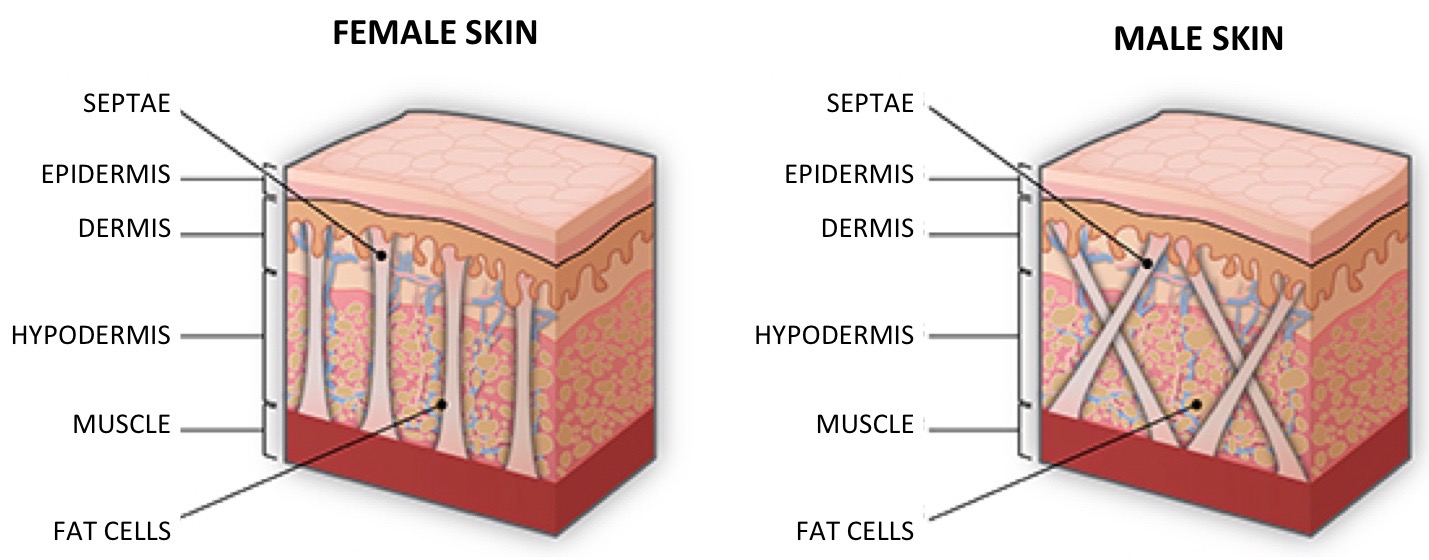
In women, the connective tissue (formed mainly by fibroblasts and collagen fibers) is arranged in free-standing chambers filled with fat cells. These are separated by vertical walls of fibrous bands called septa. In men however, subcutaneous fat is stored in smaller chambers with septa that form a criss-cross structure.

This criss-crossing of men’s septa means the chambers are stronger and more able to contain the fat within, thus preventing it from protruding out. Meanwhile, men are also less inclined to store fat on their buttocks and thighs - the areas most prone to cellulite. This explains why men are far less likely to have cellulite than women.


Types of Cellulite

A cellulite severity scale, published in 2009, ranks the condition using three grades:

Grade 1 (mild): There is an "orange-peel" appearance, with between 1-4 superficial depressions, and a slightly "draped" or sagging appearance to the skin.

Grade 2 (moderate): There is a "cottage cheese" appearance, with between 5-9 medium-depth depressions, and the skin appears moderately draped.

Grade 3 (severe): There is a "mattress" appearance, with 10 or more deep depressions, and the skin is severely draped.

The severity of your cellulite will affect the results that can be achieved with treatment, however the appearance of all grades should be improved. Your doctor or therapist will advise you what kind of results you can expect.

Effective Cellulite Treatments 1. Venus Legacy (Radiofrequency)

Venus Legacy is an exciting new device that combines multi-polar radiofrequency and pulsed electromagnetic fields to stimulate the tissue deep down. It works by heating the tissue to shrink fat cells and trigger the production of collagen. Collagen strengthens the connective tissue that holds the fat cells in place, therefore tightening skin and reducing the appearance of cellulite.

In addition, Venus Legacy encourages the release of trapped fluid and stimulates drainage of fluids and toxins through the lymphatic system. Poor circulation of the lymphatic system is thought to be a significant contributor to cellulite formation.

As well as working on cellulite, the treatment addresses sagging skin and can also have a slimming effect. It can be used to lift and tone buttocks and contour thighs, offering the opportunity to enhance the silhouette at the same time as improving the skin tone.

Venus Legacy is completely non invasive, 100% safe (FDA approved) and painless. Treatments can be customised to target cellulite at any stage, for all skin types and requires no downtime. A course of 5-10 sessions is advised, depending on the severity of your cellulite.


2. LPG Endermologie

LPG Endermologie is a revolutionary connective tissue treatment from France that involves gently rollering and suctioning the skin to reactivate dormant cellular activity. It offers a number of benefits, including the reduction of cellulite. Using the patented "Alliance" treatment head, skin and fatty tissue are stimulated to soften them and make them less fibrous. At the same time, this stimulation helps to release fat and activate lymphatic circulation, giving skin back its tonicity.

The treatment’s efficacy has been proven by 85 scientific studies, which have shown LPG Endermologie can dramatically boost production of collagen, elastin and hyaluronic acid. These rejuvenating substances aid all-natural repair.

The system is also used as a non-invasive alternative to liposuction. Applied on the areas where cellulite typically appears (legs and buttocks), it will both smooth and slim. Inner thigh or knee skin sagging can also be tackled, all at the same time.
LPG Endermologie is absolutely pain-free, safe and does not traumatise skin, meaning no redness. The treatment is suitable for men and women of all ages and all skin types. A course of 6-8 sessions is recommended for optimum results.


3. Ultrasound Cavitation

Ultrasound Cavitation is a non invasive treatment, which uses pulsed ultrasound energy to destroy fat cells. The high-frequency sound waves disrupt the fat cell walls, causing the contents to be released. Meanwhile, the surrounding tissue, nerves and muscles are left completely unharmed by the procedure.

The process stimulates the lymph system, which works to naturally eliminate the fat. Reducing the subcutaneous fat (fat that forms under the surface of your skin) helps to eliminate cellulite. What’s more, you can experience a significant reduction in the circumference of your thighs or bottom (average circumferential loss per area treated with ultrasound is 4.5 cms).

Ultrasound cavitation is safe, quick and painless - it is a gentle and soothing experience, much like a hot stone massage. Treatments take an hour or less and patients can return to work immediately afterwards. Between 3-6 treatments, scheduled two weeks apart are recommended for each treatment area.


4. Thigh lift

If you’re looking for a surgical solution to your cellulite and have additional aesthetic concerns you wish to address, a thigh lift can deliver a total thigh makeover. A thigh lift (also called a crural lift) literally involves lifting the sagging skin and fatty tissue on the upper and outer thigh towards the groin. Excess skin and tissue is removed and deep support sutures are placed in the underlying tissues to help create a tight and toned thigh.

The procedure is combined with liposuction in order to remove larger amounts of fat and further shape and contour the thighs. The removal of fat reduces the appearance of cellulite, while surgical skin tightening leads to improvements in dimpling and other irregularities.

Although a thigh lift can be performed on an outpatient basis (meaning you don’t have to stay overnight in the clinic), it does require at least two weeks of downtime (up to one month if you have a physical job). You will also have scars - they are usually hidden in the groin crease, but can sometimes extend along the inner thigh.

Because of this, a thigh lift is a good choice if you have significant loose skin and excess fat in addition to cellulite. If you are only seeking to tighten and tone, then a non-surgical treatment can provide pleasing results.


To find out which of the above treatments would be best suited to you, book a consultation at Ocean Clinic Marbella on 951 775 518 or email info@oceanclinic.net  

Sunday, 21 January 2018

What Questions Should You Ask Your Plastic Surgeon?

With the new year upon us, you might well be considering some cosmetic surgery. If you are, it’s important to do your homework and choose your surgeon carefully. 


Naturally, you’ll want to make sure they have the necessary training and experience to carry out your procedure, but there are other factors to double check too. 

To help you, we’ve put together a checklist of top questions to ask at your consultation, ensuring you can move forward with your treatment plans with confidence. Here’s to a happy new you!

5 Important Questions to Ask Your Plastic Surgeon 


𝥷 1. Are you a plastic surgeon or a cosmetic surgeon? 


You might not realise there is a difference, but the terms ‘plastic surgeon’ and ‘cosmetic surgeon’ cannot be used interchangeably. Plastic surgery is a specialist medical field and those who practice it will be certified by national and/or international boards. This means they will be held to the highest standards, encompassing everything from skills, knowledge, judgment, safety and ethics. 

Cosmetic surgery, on the other hand, may be performed by general physicians and unfortunately, some are not under the guidance of a properly credentialed board. It’s easy to check out a surgeon’s credentials online. 

Ocean Clinic’s Head Surgeon Dr. Kai Kaye is a fully registered plastic surgeon in Spain, Germany and the UK. He is a full member of: 

International Society of Aesthetic Plastic Surgery (ISAPS)
American Society of Plastic Surgeons (ASPS) 
Sociedad Española de Cirugía Plástica Reparadora y Estética (SECPRE) 
Deutsche Gesellschaft der Plastischen, Rekonstruktiven und Ästhetischen Chirurgen (DGPRAC) 
Gesellschaft für Ästhetische Chirurgie Deutschland eV (GACD)
British Association of Plastic Reconstructive and Aesthetic Surgeons (BAPRAS) 

He is also a fellow of the European Board of Plastic, Reconstructive and Aesthetic Surgery

𝥷 2. Were you trained specifically in the field of plastic surgery? 


Some physicians performing plastic surgery procedures are primary care physicians (GPs), emergency room doctors or general surgeons without residency training in plastic surgery. Many take short courses in specialist procedures such as liposuction or breast augmentation and then return to their practice to begin performing them on patients. 

A board certified plastic surgeon, meanwhile, will have completed at least five years training in plastic surgery, including a residency training programme at a clinic or hospital. They may also have undertaken extensive study in specialist fields of plastic surgery. Be sure to obtain their full C.V. 

Dr. Kaye received his medical degree from the University of Munich in 2001 and subsequently received his University Doctorate Magna cum Laude in 2002 following two years of research in the field of reconstructive plastic surgery. He then completed a two-year residency at the Park Klinik Birkenwerder in Berlin with a special focus on breast surgery and autologous fat transfer. 

After joining the highly respected Plastic and Reconstructive Surgery Department at the University of Aachen, Germany, Dr. Kaye gained specialist experience in microsurgery, burn surgery and hand surgery. 

𝥷 3. Where will my procedure be performed? 


Some surgeons do not have their own operating facilities and will use those of another clinic or hospital. If that is the case, you should ask for full details and request to view the operating theatre and recovery rooms. If your procedure is to be performed on an outpatient basis (meaning you will not stay overnight), some surgeons may carry out the treatment in their office. 

Make sure the surgical facility is registered with the correct authorities and has the necessary equipment should a medical emergency occur, such as a defibrillator. You should also ask about the professional insurance they have in place. 

Ocean Clinic has its own state-of-the-art operating theatre, on site at its central Marbella premises. It is fully licenced and equipped and has its own overnight patient ward. This includes five luxury private rooms featuring en suite bathrooms, flatscreen TVs, Wi-Fi and facilities for visitors to stay overnight. 


 𝥷 4. How many procedures of this type have you performed? 


It’s important to make sure your surgeon has adequate experience; not just in the field of plastic surgery generally, but in the specific procedure you are requesting. You should consider both the volume and frequency, as well as the time since they last carried out the surgery (i.e. they might have done a large number of facelifts in the past, but not any in the last five years). 

As a minimum, you should look for a surgeon who carries out the procedure once a month. For something common, like breast augmentations, it’s reasonable to expect the surgeon to have carried out 50+ in the last year. You should also ask to see a selection of before and after photographs of patients who have had the procedure you’re requesting. 

Additionally, you can ask to speak to one or two of those patients to find out about their experiences first hand. This is something we are happy to arrange at Ocean Clinic Marbella. 

𝥷 5. What are my options if I am dissatisfied with the outcome of my surgery? 


If you have carried out your due diligence, then the chance of anything going wrong with your surgery is significantly minimised. However, it’s not always possible to foresee every circumstance or anticipate how the body will heal. Therefore, it’s important to know how your surgeon will tackle complications or complaints, should they occur. 

What are the possible complications associated with your procedure and what steps would they take to rectify them? Is revision surgery included at no extra cost? Do you need to take out additional, independent aftercare insurance? 

Ocean Clinic Marbella is committed to customer satisfaction and offers any additional treatment required included in the original price. Our dedication to patients has led to us winning the WhatClinic Customer Service Award. Ocean Clinic Marbella has also been certified by the International Standards Organisation (ISO). 

And finally… It goes without saying that you should make sure your consultation is with a properly qualified medical professional and not a salesperson. At Ocean Clinic Marbella your consultation will always take place with the appropriate specialist. 

To make an appointment please contact us via our online contact form or send us a message on Facebook.

Monday, 18 December 2017

Dr. Kästner Receives Master Class From Penis Enhancement Pioneer

Ocean Clinic’s Doctor Sonja Kästner has successfully completed a Master Course in Penoplasty (penis enhancement).


Having trained in penis enhancement surgery in Germany, Dr. Kästner wished to further her skills and knowledge in this specialist field. She traveled to Milan in Italy to learn about the advanced penoplasty techniques being pioneered by Professor Alessandro Littara, with the aim of making them available to patients here on the Costa del Sol.


Says Dr. Kästner: “Professor Littara is an authority in male genital aesthetic surgery. He’s been performing penoplasty since the 90’s and has continuously modified, improved and perfected the procedure, having operated on thousands of patients from all around the world. It was an honour to learn about the latest modifications in penis enhancement from Europe’s leading surgeon in the field.”


The master course in penoplasty took place over two days and included a total of nine live surgeries. Dr. Kästner was joined by a small number of fellow surgeons, who had also come to be trained by Prof. Littara.


“We got to know urologists and plastic surgeons from all over the world,” she says. “Professor Littara is a genial and interesting guy and we were shown the newest techniques operating together with him.


“As well as studying penile lengthening through cutting of the ligament which attaches the penis to the pubic bone, we looked at increasing girth via fat transfer and treating premature ejaculation through the injection of hyaluronic acid.


“Overall, it was a very worthwhile course and I am now certified as an Associate of the International Academy of Penoplasty (IAP). I am delighted that Ocean Clinic patients will be able to benefit from my enhanced knowledge and experience.”


Penis enhancement surgery, now being carried out by Dr. Kästner in Marbella two weeks per month, can result in additional length of 1.5 to 4 cms, and increased girth of 25 to 35%.


To learn more about the procedures read an interview with Dr. Kästner, or contact Ocean Clinic Marbella for a consultation.

Tuesday, 5 December 2017

Ocean Clinic’s Pro Bono Work Recognised with Charity Award

Ocean Clinic Marbella has been recognised for its charity work in Africa in the 2017 German Medical Award.


The highly respected awards, hosted in Berlin, aim to honour medical professionals who show “extraordinary commitment to the principles of medical ethics, innovation and supreme quality standards in patient care.”


Ocean Clinic was named winner of the Medical Charity Award, following two charitable missions to Lamu, Kenya, where Head Surgeon Doctor Kai Kaye and his team carried out reconstructive surgery.


In total across the two trips, 85 adults and children living with disfigurements such as congenital malformations, tumours, hernias, burns and ulcers, were treated. All members of the surgical team from Ocean Clinic gave up their time for free, in addition to paying for their own flights and accommodation. Meanwhile, a fundraising campaign launched by the clinic raised more than €5,000 to purchase essential materials and equipment.


“The Medical Charity Award honours personalities and projects that distinguish themselves through their outstanding medical and social commitment,” says a spokesperson for the German Medical Award.


The award itself supports a charitable project; this year proceeds went to the NCL Foundation (For a Future without Childhood Dementia) from Hamburg.


Dr. Kaye received the award at a ceremony which took place at the Sheraton Grand Hotel Esplanade, Berlin on November 25.


He says: “It was an honour to receive the award in the name of the whole team. The plastic surgery relief project in Lamu was a big achievement for us all and something we are very proud of.


“Giving back is an important part of what we do at Ocean Clinic and, while the gratitude of those we were able to help was reward enough, I’m delighted for my team to be recognised for their amazing work.”

Ocean Clinic intends to run the Plastic Surgery Relief Camp again next Easter. People can support the 2018 campaign through financial donations, providing medical equipment and / or personal involvement. Please contact info@oceanclinic.net to get involved.


To find out more about Ocean Clinic Marbella's charity work click here.

Wednesday, 22 November 2017

Breast Reconstruction - Know Your Options

Losing a breast is, for many women, one of the most traumatising aspects of breast cancer. Mastectomy patients often report feeling less feminine, which can lead to a loss of confidence and sexual well-being.

However, advancements in breast reconstruction techniques mean there are a variety of options for women who want to restore their figures.
Ocean Clinic Marbella specialises in breast surgery, including enhancement, reduction, and reconstruction. Read on to discover the treatment options available or book a consultation for personalised advice.  
Not about vanity
The decision to have breast reconstruction is a highly individual one; lots of women do decide to “go flat” and avoid further surgery. For others, breast reconstruction is an important part of their treatment and recovery.
Opting for reconstruction can minimise the psychological impact associated with losing a breast, especially if performed immediately after mastectomy. One study, which compared patients who had undergone breast reconstruction with those who had a mastectomy without reconstruction, found they were significantly more satisfied with their appearance and fared better psychosocially and sexually. Furthermore, they functioned better physically, experiencing less pain and fewer limitations.


Reconstruction without implants

In some cases it is possible to reconstruct a breast exclusively with a patient’s own tissue. Known as “autologous flap” surgery, it involves taking a section of skin, fat and sometimes muscle, from elsewhere on the body and transplanting it to the breast.

So-called “flaps” can be taken from the tummy, buttocks, upper back, inner thigh or upper hip. They can be cut completely free or left partially attached to the blood supply (pedicled) and moved up to the chest from within the body. With “free flap” reconstruction, the blood supply is re-established using microvascular surgery techniques.

The most popular autologous flap method uses the tummy as a donor site. This method has the unintentional benefit of providing patients with a tummy tuck at the same time, due to the relocation of abdominal tissue and subsequent skin tightening.

It can be performed either as free or pedicled, but free flap (DIEP flap) is preferred because it means the rectus abdominis muscle can be spared, helping to preserve abdominal strength.

The reconstructed breast can be further filled and shaped through fat transfer, which involves removing fat from another part of the body via micro liposuction and reinjecting it. Like the transplanted abdominal tissue, the fat regains a blood supply and becomes permanent.  

Providing a patient has enough donor fat and tissue on their body, autologous flap surgery can offer an all-natural way to restore the shape and size of their breast. The tissue ages naturally and changes volume corresponding to the patient’s overall body weight. While the patient will be left with scars on the donor site, when the flap is taken from the abdomen, these scars are well concealed below the bikini line.


Reconstruction with implants
If a skin-sparing mastectomy or lumpectomy is performed, where much of the breast skin is preserved, an implant can be immediately implanted under the pectoralis muscle. If the mastectomy leaves the skin too tight, a two-stage implant process is necessary.  

Firstly, a tissue expander (essentially a silicone pouch) will be put in and slightly expanded with saline solution. Over a period of several weeks, the expander is expanded via the injection of additional saline solution. This gradually stretches the skin and creates a pocket for the implant.

A new type of expander called AeroForm uses carbon dioxide instead of saline solution. It is needle-free and is expanded by the patient, at home, using a wireless, handheld dosage controller.

When the breast tissue expands to the desired size, the expander is replaced with a permanent implant. The benefit of using implants over autologous flap is that scarring is restricted to the breast itself and the procedure does not rely on the patient having sufficient donor tissue. It is therefore the best option for thinner individuals.


Timing for a breast reconstruction

The best outcomes can be achieved when breast reconstruction is carried at the same time as mastectomy or lumpectomy. Not only does it reduce the number of times a patient must undergo surgery and minimise scarring, deciding on immediate reconstructions enables patients to opt for a skin-sparing surgery.

Most women are eligible for skin-sparing mastectomies (unless the tumour cells are close to the skin). During skin-sparing mastectomy, the surgeon removes only the skin of the nipple, areola, and the original biopsy scar. Then the surgeon removes the breast tissue through the small opening that is created. The remaining pouch of skin provides the best shape and form to accommodate an implant or autologous flap. It enables patients to get the most realistic and pleasing results from breast reconstruction.
If a patient does not opt for immediate reconstruction, a skin-sparing mastectomy is not usually performed. The surgeon will most likely remove as much skin as is required to make the scar and the surface of the chest flat.
If a patient decides to wait and have reconstructive surgery later, they may still choose between an implant or autologous flap. The incision will be made along the scar of the previous mastectomy. In the case of implants, an expander will be used first, which does require the patient to have two operations.

Breast reconstruction and radiotherapy
Radiotherapy can reduce the likelihood of a successful breast reconstruction. This is because radiation kills normal tissue as well as cancerous tissue. It is therefore recommended to delay reconstruction until after treatment has been completed.
Radiated skin is hard to stretch and often becomes discolured. In addition, because radiation therapy significantly increases the risk of capsular contracture (the formation of excessive scar tissue around an implant) delayed autologous flap reconstruction is recommended over reconstruction with implants.
The good news is that, whatever a patient’s treatment plan, reconstruction is almost always an option. And although immediate reconstruction is preferable from a surgical point of view, breast reconstruction can be carried out months or even years after surgery. This means patients can take as much time as they need to recover, whether that’s physically or mentally.
Achieving the best aesthetic result possible
Achieving symmetry between a patient’s breasts is a key goal. To this end, a reconstruction can be carried out in combination with surgery on the remaining breast to ensure they are as close in size and shape as possible.
If the mastectomy has included the removal of the nipple, this can be reconstructed three to four months after surgery. This can be done by creating small flaps at the site where the nipple would have been and forming them into a nipple mound.

Micropigmentation tattoo is then used to simulate the natural colours. Alternatively, micropigmentation alone can used, with colour skillfully applied to give the appearance of a three-dimensional nipple.
While your new breast will never look or feel 100% like your old breast, breast reconstruction surgery can help you feel like your “old self” again, making you more confident to be intimate, on the beach or in the changing rooms.

If you are facing the prospect of mastectomy or have already undergone breast removal and would like to discuss your options for reconstruction contact Ocean Clinic Marbella.

Friday, 3 November 2017

Do You Have A “Mathematically Beautiful” Face? (And How to Get One If You Don’t)

It’s often said that beauty lies in the eye of the beholder, however scientists have long been fascinated by trying to identify formulas for attractiveness.


On this blog, we have previously looked at the measurements hailed as “perfect” for noses, lips and buttocks - now we can reveal what science says about face shape.


The recent study, conducted by researchers at the Temple University School of Medicine in Philadelphia and published in Aesthetic Surgery Journal, aims to provide a guide for plastic surgeons to ideal mid-face proportions.


The study involved analysing photographs of 55 women with idealised facial proportions - the images were selected from a stock photography website after running a search for “beautiful young woman not smiling”.


Some 13 facial measurements were taken, but only eight were found to be statistically significant in terms of attractiveness. The researchers recorded the average measurements from the women’s faces (see below).


The most important measurements were:


  • The distance between the eyes (59.2mm)
  • Eye diameter (11.5mm)
  • Nose length (43.6mm)
  • Distance from the inside of the eye to top lip (53.8mm)
  • Width from cheekbone to inside of the eye (13.1mm)
  • Diagonal of cheekbone to chin (98.9mm)
  • Distance from cheekbone to hairline (86.9mm)
  • Distance from cheekbone to chin (83.5mm)


The overall conclusion from the study was that a heart-shaped face, with broad cheekbones and a narrow chin, was the most attractive. This face shape can be seen on celebrities like Reese Witherspoon, Jennifer Love Hewitt and Eva Longoria.
Writing in the journal, lead author Dr Gary Linkov, says: “The notion of ‘mathematical beauty’ implies the existence of ideal facial contours, dimensions, and ratios that, when present, create a harmonious, balanced, and attractive face.
“A heart-shaped mid-face is the quintessential symbol of youth and remains the overarching goal of mid-facial rejuvenation. However, few objective criteria exist to describe mid-facial position, whether in the ideal or aged state. We felt that these parameters might be useful to clinicians looking to find means of quantifying ageing changes, as well as postoperative improvements.”
Although some measurements recorded in the study - such as the distance between the eyes - cannot be cosmetically altered, others can be manipulated with injectable filler or fat transfer.
Cheeks, in particular, lose volume with age. This can be restored with fat or filler in order to give a fuller, more youthful looking face. One finding of the study was that cheekbones should be as wide as eyebrows for maximum attractiveness - augmenting the volume in the cheeks can help to achieve this appearance.
Ocean Clinic’s Head Surgeon Dr. Kai Kaye says: “Enhanced volume added to key areas of the face such as the cheeks and lips can make you look younger and more beautiful. However, if you don’t want a cosmetic procedure, contouring with makeup can help create the illusion of the desireable heart-shaped face.”

Meanwhile, women who have experienced facial skin sagging, resulting in jowls that have altered the lower proportions of their face, can have their jawline restored through a mini facelift.

To find out how your facial proportions could be enhanced, contact Ocean Clinic Marbella for a free consultation.