Tuesday, 4 May 2021

What is HIFU and what can it do for your face?

Have you heard of the term HIFU and wondered what it is? HIFU stands for ‘High Intensity Focused Ultrasound’ and it’s a treatment that uses ultrasound to lift and tighten the skin on the face. Interested to know how it works? Read on!


How does HIFU work?


The science behind HIFU is based on heating the tissue underneath the skin in order to jump-start your body’s own process to create fresh, new collagen. Collagen is the protein that gives skin its youthfulness by keeping it firm and toned - and it’s something we lose as we age. 


HIFU uses microfocused ultrasound energy to bypass the surface of the skin and target tissue at exactly the right depths and at the right temperature. Different handpieces can be used to reach tissue at three different depths: 1.5mm, 3.0mm and 4.5mm. The 4.5mm depth is what sets ultrasound technology apart from other technologies, like radiofrequency. Radiofrequency cannot reach the depths of 4.5mm. 


4.5mm depth - Targets the ‘SMAS’ layer. The SMAS layer is the deep muscle layer of the face that is tightened in facelift surgery.


3.0mm depth - Targets the connective tissue, which is made up of a mesh of elastin and collagenous fibres, in order to strengthen the skin’s foundation.


1.5mm - Targets the epidermis of the skin (upper layer) to refine pores, improve skin tone, and reduce fine lines.

What’s the difference between HIFU and Ultherapy?


HIFU and Ultherapy are often talked about interchangeably and it can be confusing. HIFU is the name of the technology and Ultherapy is a brand name. There are a number of HIFU brands on the market but at Ocean Clinic we use Ultherapy. Why? Ultherapy is the only machine that offers ultrasound imaging. This allows doctors to scan and analyse your skin during treatment. 

It means that vital structures, such as blood vessels and bone, can be avoided, giving you a safer treatment experience. 


What’s more, Ultherapy is the only HIFU machine that’s been approved by the US Food and Drug Administration (FDA) as safe and effective for lifting skin and reducing wrinkles on the face, neck and décolletage. 

What happens during Ultherapy treatment?


Ultherapy is an entirely non-invasive, minimally painful treatment and most patients require only one session to see results. It will begin with a consultation with your doctor who will assess the specific areas to be treated. A numbing cream will then be applied and left to penetrate the skin for around 30 minutes. 


Next, the Ultherapy treatment will be performed by a qualified medical doctor. Real-time imaging via ultrasound lets the doctor identify and target the areas that require treatment. You may experience a warm or tingling sensation beneath the surface of the skin but it should not be painful.


The length of your treatment will depend on the area being treated and your individual treatment plan. A face and neck procedure typically takes 60-90 minutes, while treatment for the upper chest (or décolletage) takes approximately 30 minutes.


After treatment, you can return to your normal activities immediately without any post-treatment restrictions or requirements - it’s why Ultherapy is sometimes referred to as a lunchtime facelift! In terms of side effects, your skin might initially appear flushed but the redness should disappear within a few hours. Some patients experience slight swelling, tingling, or tenderness to the touch, but these are mild and don’t last long.


What are the results of Ultherapy?


Some patients see an initial effect right after their treatment, but the real results appear over two to three months as new collagen works to lift and tighten skin on the neck, chin and brow as well as smooth skin on the chest. 


The improvements can continue to appear for six months or even longer - one study found that 95% of patients were satisfied with their results after one year. The results are gradual and natural-looking and, although Ultherapy won’t duplicate the results of a facelift, it’s a good alternative for those not ready for surgery. 


The proven results of Ultherapy are supported by over 50 clinical studies and 90 peer-reviewed papers. To date, there have been more than 1.5 million treatments with Ultherapy globally. It’s been shown to:


  • Reduce wrinkles by 11%

  • Increase skin elasticity by 19%

  • Improve facial lifting by 9%

  • Increase moisture content by 4.5%

  • Decrease pore size by 27%

  • Increase dermal density by 30%


Are the results from Ulterapy permanent?


The results are permanent in the sense that you will always look better than you otherwise would have had you not had the procedure due to the creation of new collagen. You will notice the benefits for several years but it’s important to note that Ultherapy will not stop the ageing process. Collagen will continue to break down as time goes by. To maintain it, you can choose to have a touch-up procedure after a couple of years.

Who is a good candidate for Ultherapy?


The ideal Ultherapy candidate is anyone who is interested in age reversal, although the treatment will never replace the results of a surgical facelift. A facelift will result in more lifting and tightening since excess skin is removed but you may choose Ultherapy instead if:


  1. You don’t “need” a facelift yet (younger patient)

  2. You cannot medically undergo a surgical procedure

  3. You don’t want a surgical procedure

  4. You’ve had previous surgery and want a little touch-up


It’s best to see a doctor who offers both Ultherapy and facelift surgery and is able to give you an unbiased opinion.


Want to find out if Ultherapy is a good treatment for you? Contact Ocean Clinic on (+34) 951 77 55 18.


Monday, 12 April 2021

4 of The Best Summer Body Treatments

With Spain’s State of Alarm set to end and the vaccination programme well underway, it looks like summer could be saved. And that means getting back to the beaches and pool clubs of Marbella! But will you be ready?


Lots of us let our fitness and beauty regimes slide a little bit over 2020 and, as a result, might not be as excited as we should be at the prospect of getting back into swimwear. 


If you’re not looking forward to stripping off, don’t worry! In this blog post, we’re going to lay out the 4 best non-surgical treatments for getting beach body confident.


Best for fat loss: Coolsculpting 


Coolsculpting is a non-surgical treatment that reduces stubborn fat bulges using fat freezing technology. Fat cells don’t like the cold and at a certain temperature, they will freeze and die. Once that happens, your body will naturally eliminate the dead cells in 1-3 months, resulting in up to 20%-25% reduction of fat in a treated area.


Coolsculpting can be used to get rid of fat on the thighs, abdomen and flanks. It’s also effective for bra fat, back fat, underneath the buttocks and upper arms. Patients can start to see a difference after as little as one treatment. It’s totally painless and can be done in between 35 and 75 minutes.


Best for cellulite: Cellfina


Cellfina can significantly improve the appearance of cellulite on your buttocks and thighs in just one 45-minute session. Cellfina technology is based on a procedure called subcision. It involves using a tiny blade inserted under the skin to cut and release the tight fibrous bands that cause skin puckering (a numbing solution is used to make sure you don’t feel pain). Once released, the cellulite dimples bounce back and become smooth again.


Cellfina can also treat scars and wrinkles. Results can be seen in as little as three days and can last up to three years. According to a study, one Cellfina treatment improved the appearance of cellulite in 98% of people two years after they had the procedure.


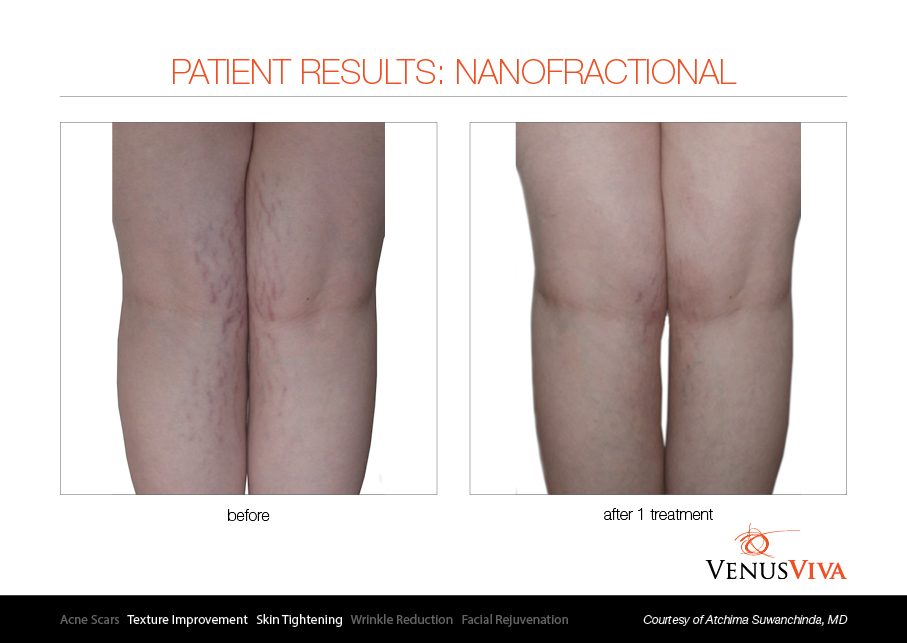
Best for stretch marks: Venus Viva & Dermapen 4


Ocean Clinic has its own magic combo treatment for stretch marks, it combines Venus Viva with Dermapen 4, two non-invasive, pain-free treatments. Venus Viva is a skin resurfacing treatment that uses nanofractional radiofrequency to heat the cells deep in the dermis. This stimulates collagen production and encourages the skin to repair itself. As the skin regains elasticity and tightens, stretch marks become smoothed out. A published clinical study showed 97% patient satisfaction for overall improvement. 


The effect of Venus Viva is enhanced with Dermapen, the only microneedling device with a dedicated setting for stretch mark scars. The pen uses 12 tiny needles to create microscopic punctures to the inner and outer layers of skin. This results in a regeneration of the collagen and other elastic fibres (read more about our protocol for treating severe stretch marks).


Best for skin tightening: Exilis Elite


Exilis Elite is a non-invasive body contouring device designed to tighten skin while also reducing fat. It uses a unique combination of radiofrequency, ultrasound and skin cooling. The aim of the treatment is to precisely heat the skin and tissue at different depths using focused thermal energy. Doing this at 40-42°C for 5 minutes in each treatment area leads to the unravelling of collagen structures.


Over time, the healing process encourages the production of new collagen fibres, helping to tighten loose or slightly sagging skin. At the same time, the treatment targets fat cell membranes, releasing liquid fat inside the cells. This makes them shrink, resulting in the treated area becoming trimmer and more toned. Exilis Elite can be used to treat love handles, bingo wings (flabby arms), saddlebags on hips, flabby thighs and post-baby tummies. It takes between 4-8 sessions but the results are permanent, providing you maintain your weight.


Go from zero to confident in no time!


All of these treatments are non-surgical, can be carried out quickly and don’t require any downtime. It means you can be looking and feeling good in next to no time, and ready to hit the beach. If, however, you’re looking to achieve more significant results, consider our surgical body treatments including liposuction, tummy tuck and breast and buttock enhancement. 


For more information on any treatment, surgical or non-surgical, contact Ocean Clinic on (+34) 951 77 55 18 or by email: info@oceanclinic.net 


Tuesday, 23 March 2021

Aftercare: What Happens After Your Surgery at Ocean Clinic?

At Ocean Clinic, we believe how our patients are treated after their surgery is just as important as before. Our aftercare programme starts the moment you leave the operating theatre and continues throughout your recovery. 


Your own room


Immediately after your surgery at Ocean Clinic Marbella you’ll be taken to the recovery room to come round from the anesthesia. Once you are awake, you’ll be assisted to your private room. The day surgery rooms, which overlook Marbella’s iconic Alameda Park, are designed to make you as comfortable as possible. Each one features an en suite bathroom, flat-screen TV, Wi-Fi, air conditioning and large sofa for visitors.


Round the clock care


You’ll be assigned a nurse who will take care of you, bringing you refreshments, changing your dressings and helping you manage your pain with intravenous painkillers. If you’ve had a facial procedure, you might be given a cooling face mask to wear. The mask has iced water continuously pumped through it and helps to minimise bruising and swelling. 


If you choose the option of staying on in our adjoining recovery facility you’ll be able to choose a hot meal from a local restaurant, which will be brought to you in your room. To make you as comfortable as possible overnight, you’ll be given medication to help you sleep and you will be able to call for a care nurse at any time. 


Getting discharged


After your surgery, you’ll be checked several times by Ocean Clinic’s surgeons to see how you’re feeling. Before you’re discharged, you’ll be fitted with any compression garments that you might be required to wear. And you’ll be advised on how to take care of yourself when you get home. This will include the medications you need to take, any creams to apply and guidance about bathing, sleeping and activity levels. You’ll be given a 24-hour contact number so you can always speak to someone if you have any concerns. 


Follow-up appointments


A week after surgery, you’ll be asked to return to the clinic for your first follow-up appointment. You’ll have your dressings changed or bandages removed, and you might be ready to have your stitches removed too. 


Something we’re proud to offer all our surgical patients is a course of lymphatic drainage massages with our physiotherapist Silvia Pino. The purpose of the lymphatic massage is to help reduce swelling by moving waste fluids from the treated areas. While you receive the massage, you will wear some special ‘trousers’ that inflate, placing gentle pressure on the legs to encourage fluid circulation. 

You’ll also be treated with either ultrasound or radiofrequency therapy, which help to speed up healing and prevent the formation of scar tissue. They do this by heating the layers beneath the skin and triggering the production of collagen and elastin. Both of these treatments are non-invasive and completely painless. 


On-going support


You’ll visit the clinic for a number of weeks to receive post-operative care and you’ll always be able to speak to a specialist on your visit if you’re experiencing any issues. When your treatment course is complete, you’ll have a final appointment with your surgeon so they can sign-off on your results, and take photographs for your medical record. 


Importantly, you’ll always be able to contact Ocean Clinic and speak with a surgeon at any point in the future, giving you reassurance that you have on-going support. Our patient testimonials underline our commitment to first-class care at all stages of your treatment. Contact us to make a consultation if you’d like to know more. 


Monday, 1 March 2021

Why Now is A Great Time for Plastic Surgery

 Coronavirus has put the brakes on our social lives. But while we may miss getting dressed up and going out, the situation presents some advantages for working on our appearance.


As well as a great opportunity to lose weight and get fit, it’s also the perfect time to undergo plastic surgery. Read on to discover the 5 reasons why - and the procedures you might want to consider. 


You have downtime


Most plastic surgery procedures require some downtime, whether that’s because you need to rest and recover, or simply because you will have visible swelling and bruising. Either way, you’ll usually need to schedule a period at home, taking time off work and avoiding important dates in your diary. 


Right now, though, many of us are carrying out our work from home and, instead of having to go to meetings, are doing everything online or over the telephone. On top of this, all the big events that we would normally want to look good for - such as weddings, birthday celebrations and vacations - are on hold. This means it’s much easier to carve out the time needed for recovery without anyone noticing. 


You can wear a face mask


Having to always wear a face mask in public is pain… but if you’ve had a procedure to your face it’s a blessing in disguise! Being able to conceal your lower face beneath the mask when you go out, means you can heal without feeling self-conscious.


It’s a good time to consider getting treatment for your eye bags, having a nose job, a chin implant or even a lower face lift. The face mask is also handy for hiding initial swelling or redness from non-invasive procedures like injectable fillers and microneedling.  


There’s more focus on the face


Another reason you might be thinking more about plastic surgery at the moment is the increased focus the pandemic has put on our faces. The reason for this is two-fold. Firstly, the switch to virtual communications - speaking with friends, family and work colleagues by video rather than in-person - means we are spending longer looking at our own faces. Seeing ourselves from different angles on camera can cause us to notice imperfections we weren’t so aware of before.


Secondly, wearing face masks has diverted attention away from the mouth and towards the upper portion of the face. Because of this, we’re focusing on our eyes and brow more than we were previously. Suddenly, all we can see are crow’s feet, sagging upper eyelids and forehead lines! Getting cosmetic injections is a quick fix, or boost your confidence for the long term with a brow lift.


You might have more money


If you’re one of the lucky ones, and Covid hasn’t affected your income, then it’s likely you’ve got a bit more surplus money than usual. That’s because the things you’d normally spend it on, such as going out to restaurants and bars in the evening or taking trips abroad aren’t possible right now. 


You’re probably also spending less on clothes and visits to the hairdresser or beautician since you aren’t going out as much. Think about it, how much have you saved? Plastic surgery can be difficult to justify when you’re spending lots on your social life, but it becomes less of an indulgence when you haven’t been treating yourself elsewhere.


You need a boost 


Not being able to see loved ones, travel or do your favourite things can chip away at your wellbeing. We’re also constantly being exposed to negative news so it’s normal to feel a bit down and despondent.


Doing something for yourself at this time can give you the boost you need. If you’ve thought about having plastic surgery for a while but never found the right opportunity to do it, now could be that time. Improving your appearance will increase your self-confidence and self-esteem and this will help your overall outlook.


Think now could be a great time for you to get treatment?


If now seems like the perfect opportunity to get the aesthetic treatment you’ve been thinking about, why not contact Ocean Clinic for a consultation? You can have a consultation with a plastic surgeon either in the clinic or online, via video call. 


All types of plastic surgery and cosmetic procedures are allowed to take place under the current restrictions and Ocean Clinic has gone to great lengths to make treatment safe for patients. You will receive a high level of care at every stage - before, during and after your procedure - and our doctors will be available to you by phone or video call throughout. 


And the best thing about getting surgery now, is that when life returns to normal, you‘ll be looking and feeling better than ever!


Contact Ocean Clinic by telephone: (+34) 951 77 55 18 or by email: info@oceanclinic.net


Monday, 25 January 2021

Got a Scar You Hate? You Don't Have to Live with It

Scarring can have a big impact on your wellbeing - not only can scars detract from your appearance, but they can also remind you of trauma you’d rather forget. 


You might think there’s nothing you can do about scars. After all, you might have got them as a result of previous surgery. But scar correction surgery can often work wonders in reducing the size of a scar, smoothing out the texture and making it much neater and less noticeable. 


Scar correction can also help in cases where the skin has healed in such a way that it is restricting movement or causing pain. And it’s also suitable for burn scars and deep acne scars. 


Director of Ocean Clinic Group Dr Kai Kaye is a specialist in scar revision, having trained in this field at the Plastic and Reconstructive Surgery Department at the University of Aachen in Germany. Read on to find out what causes bad scars and what can be done to correct them…


Why do I have a bad scar?


Scarring can turn out badly for a number of reasons. Factors that influence how well you heal include:


  • Your skin type - some people simply scar worse than others. Darker skin is more prone to make the worst scars and people with very pale skin can also be poor scar makers.

  • The location of the scar - if it’s along a joint, on skin which has a lot of movement (on a knee, for example) the scarring will be worse than if it’s on skin that doesn’t move (like behind the ear).

  • The suture technique - if your wound is not stitched up well - or you fail to get medical attention for a wound - it can result in uneven healing.

  • Your aftercare - if you fail to look after your scar during the healing process, for example by exposing it to UV light, it can become discoloured. 


Types of scars


Beyond normal, fine-line scars, there are four different types of scars that can result in a less than optimal healing outcome. These are:


Keloid scars - A keloid scar is one that’s raised, often red, and goes beyond the boundaries of the original wound. They’re caused by an overgrowth of tissue that happens when too much collagen is produced at the site of a wound. Some people are prone to keloid scarring, especially people with more pigment in their skin. In these individuals, even a simple insect bite can end up in a significant scar. Keloid scars are often itchy or painful and can restrict movement if they're near a joint.


Hypertrophic scars - Like keloid scars, hypertrophic scars are ones that rise above the surface of the skin, however, they do not extend beyond the boundary of the original wound. They’re also the result of an imbalance in collagen at the site of the wound. Hypertrophic scars occur when there is a lot of tension around a healing wound. They may continue to thicken for up to 6 months before gradually improving over a few years.


Atrophic scars -  These are pitted or sunken scars caused by a bad case of acne or chickenpox. They can also develop as a result of an injury that causes a loss of underlying fat.  Atrophic scars stay within the boundary of the original wound and typically occur in the face or on the back.


Scar contractures - Scar contractures are tight scars that occur on a joint. They’re often caused by burns and happen when the skin "shrinks" and pulls on the surrounding tissue. This restricts movement of the joint, which can also make them painful. 


What’s a ‘good’ scar?


A 'good' scar is one that fades to be a barely noticeable fine line that blends in with the surrounding skin tone. It should be placed in the right direction to ensure there is not too much tension exerted on the scar. Wherever possible, the scar should be hidden in the natural folds of the skin, for example beneath the breast or in the groin. 


Experienced surgeons can influence the result through meticulous technique and by using dissolving sutures or glue and removing other stitches early enough to avoid stitch marks. What’s more, proper aftercare - such as using silicone sheets - will ensure the best results. 


How a bad scar is repaired


If you have a scar that is causing you problems or you consider ugly there are various options available to you. In addition to surgical excision, there are non-surgical treatments that can improve the appearance of a scar. Usually, the best results can be achieved through a combination of surgery and non-invasive procedures. 


Surgical correction


Scar excision - In simple terms, scar excision is cutting out the existing scar and resealing the wound. But there are a number of different excision techniques a surgeon can use depending on the type of scar you have. For example, extramarginal scar excision involves excision of a small margin of the normal skin along with the scar in order to get normal tissue at the wound margins. On the other hand, intramarginal scar excision is done by cutting away portions of the scar at intervals of 6-12 weeks in order to preserve the normal skin as much as possible.


Tissue expansion - This is a procedure performed to promote the growth of healthy supplementary skin used for the replacement of damaged skin. It’s carried out by placing a balloon-like expander underneath the skin near the damaged region. Over time, the expander is filled with saline (or saltwater) solution causing the skin around it to stretch and grow. Once the new skin has reached its ideal size the tissue expander is removed and the new skin is redistributed, replacing the damaged area of skin. Often, tissue expansion is done before reconstructive burn surgery, using the new skin to replace scar tissue at the burn injury site.


Skin flaps - A skin flap is healthy skin and tissue that is partly detached and moved to cover a nearby wound. Flaps are transferred with their own, original blood supply (pedicle flap) and can be ‘local’ or ‘regional’. Local flaps are flaps that are located adjacent to the scar site. Regional flaps are located at a distance from the donor site and are used for extensively burned contractures on movable areas such as the anterior neck. Sometimes a flap is moved to a new site and the blood vessels are surgically reconnected. This is called a ‘free’ flap.


Skin graft - A skin graft involves removing skin from one area of the body and moving it (without its blood supply) to another. Skin grafts survive as oxygen and nutrients diffuse into them from the underlying wound bed. A ‘split-thickness’ graft involves removing the top layer of the skin (the epidermis) as well as a portion of the deeper layer of the skin, called the dermis, usually harvested from the front or outer thigh, abdomen, buttocks, or back. Split-thickness grafts are used to cover large areas. ‘Full-thickness’ grafts involve removing all of the epidermis and dermis from the donor site. These are usually taken from the abdomen, groin or forearm and are used for small wounds on highly visible parts of the body, such as the face. 


Fat graft - Fat grafting involves the extraction of fat from a donor site on the body (such as the tummy). It’s then processed and used to restore volume under depressed or adherent scars. Because fat tissue is rich in growth factors and stem cells it also results in skin regeneration, with excellent results for scar correction. 


Non-surgical correction


Steroid injections - Especially effective in keloid scars and hypertrophic scars, steroids are injected directly into the scar tissue to help decrease the itching, redness, and burning sensations that these scars may produce. The injections also help to decrease the size of the scar and soften the scar tissue. Injections are repeated over a 3-6 months period, resulting in progressive improvement. 


Laser resurfacing - Laser resurfacing uses high-energy light to burn away damaged skin. Lasers may be used to smooth a scar, remove the abnormal colour of a scar, or flatten a scar. 


Dermabrasion -  Dermabrasion involves removing the top layers of skin with an electrical machine that abrades the skin. As the skin heals from the procedure, the surface appears smoother and fresher. It’s a useful treatment for small surgical scars and acne scars.


Chemical peels - Chemical peels offer another method for resurfacing the skin. A chemical solution is applied to dissolve the top layer of skin. This triggers the skin to regenerate, often improving the appearance of superficial scars and correcting irregular colour.


Microneedling - Tiny needles are used to create micro-injuries to the inner and outer layers of the scar tissue, triggering the body’s healing process. By encouraging the production of new collagen and elastin, microneedling improves the texture of the scar. The channels created by the needles can also be used for the deep delivery of topical creams. 


Ultrasound treatment - Ultherapy is an ultrasound treatment used to stimulate collagen and elastin. It does this by heating the layers beneath the skin and creating thermal microtrauma - this leads to a reformation of elastic fibres and improves the appearance of scars. 


Hyaluronic acid filler - To fill atrophic scars (sunken or pitted), Radiesse, an injectable filler can be used. The filler is diluted (mixed with saline and lidocaine to thin it out) and injected superficially. As well as adding volume and making the surface of the scar smoother, it can help to improve discolouration. 


Downtime and aftercare


In most cases, scar correction treatment can be done on an outpatient basis and requires little to no downtime. Only when extensive skin grafting is required do patients need to stay overnight in the clinic. 


To achieve the best possible results, all our scar correction treatments include advanced scar care dressings. Silicone sheets and patches are important tools as they help to soften and decrease the redness of scars. 


We also provide compression garments to wear over the treated area and apply pressure to the scar. Especially useful in the treatment of burn scars, pressure therapy may be applied continuously for many months in order to avoid the scar elevating above the surrounding skin level and to reduce itching, redness and swelling.


Would you like to know how the appearance of your scar could be improved? Let us take a look. We offer both in-clinic and online consultations. Contact Ocean Clinic to book.